Home

Sandhills Dove Hunt 2010

Leave a comment

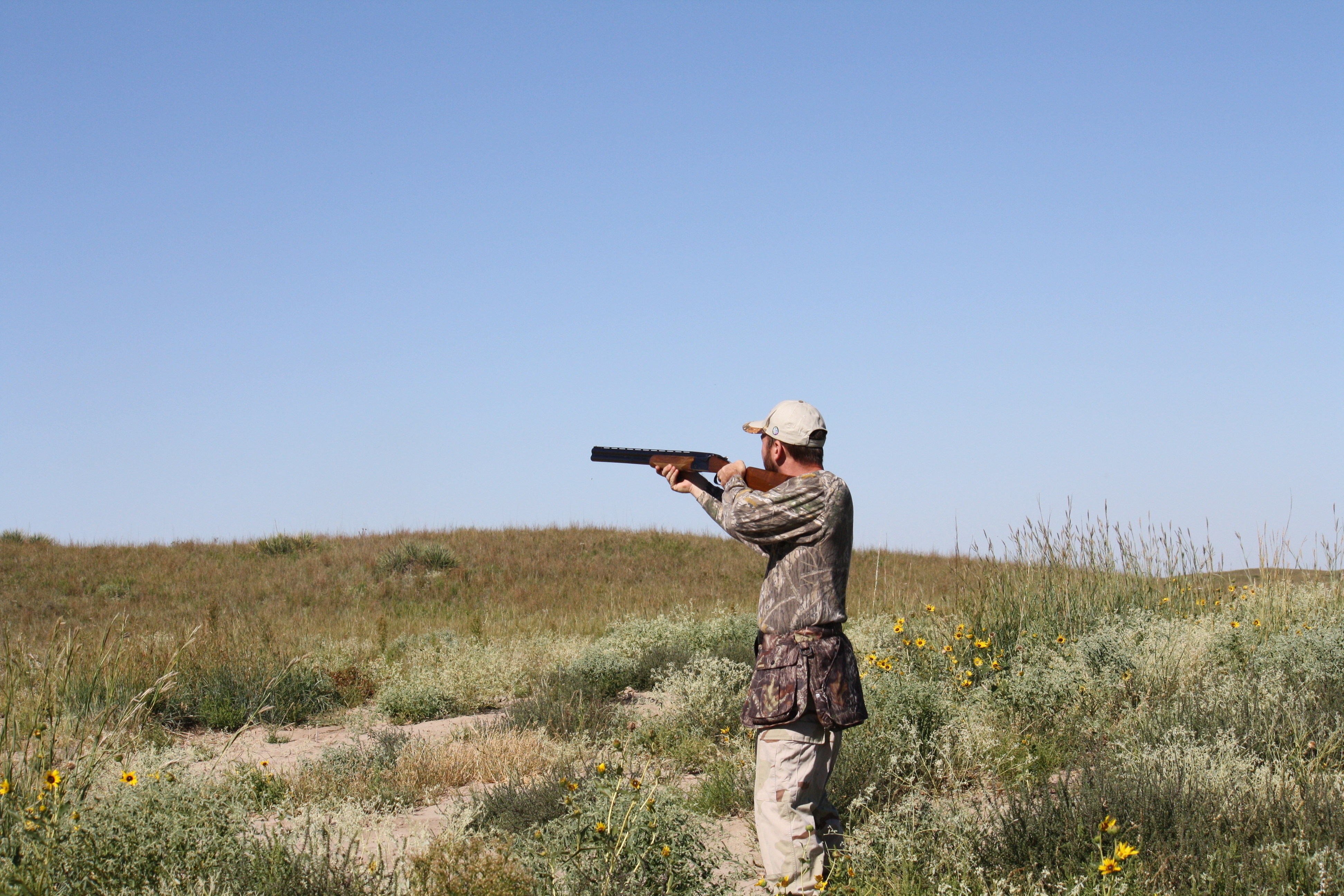
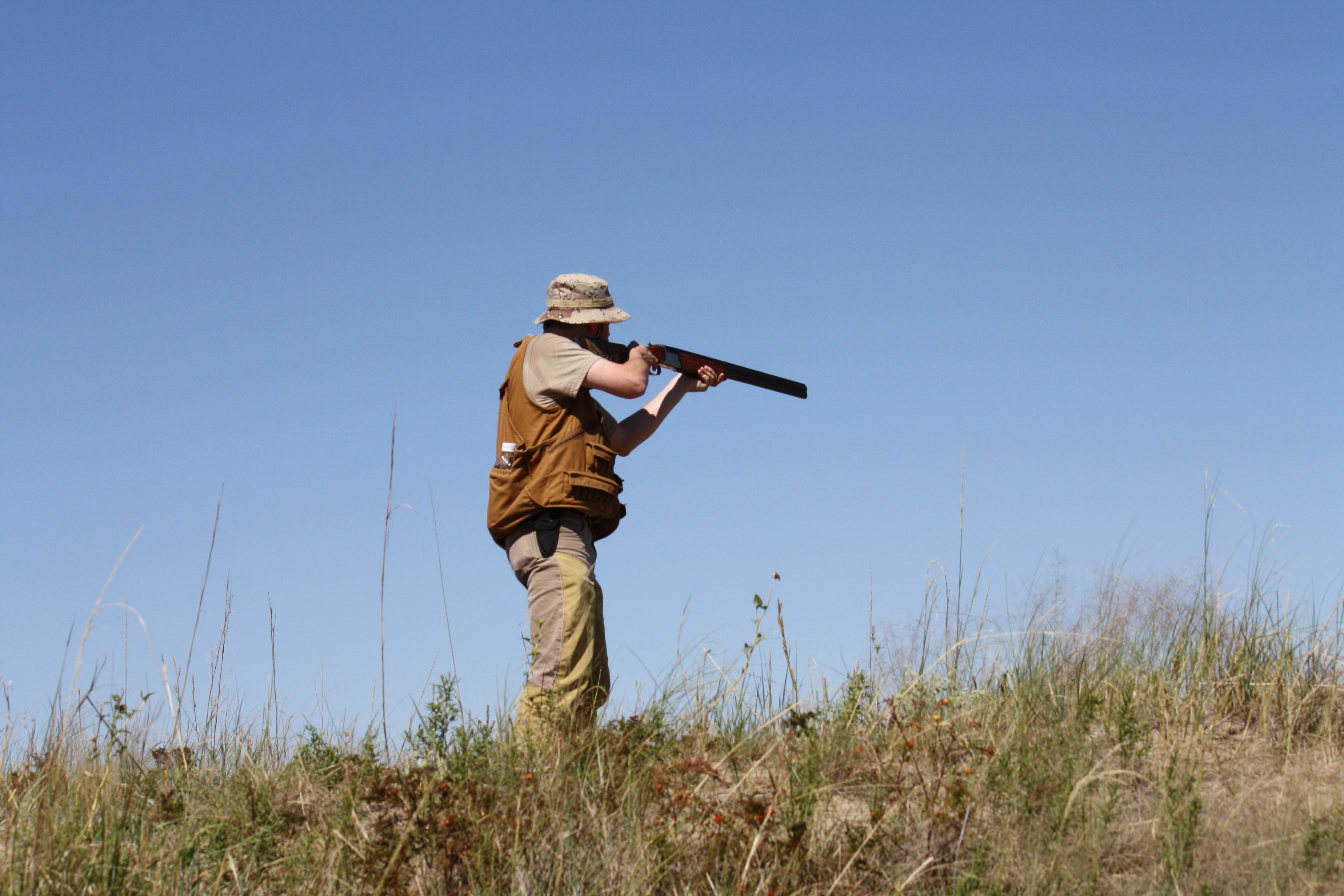
Sandhills Dove Hunt 2010 is on the books.  Charles and I were joined by our old friend Mike on our hunt near Valentine, Nebraska.   While the morning was cool and we had the energy, we started the day off jump shooting different windmills.  If you’re not familiar with jump shooting, you simply walk up and see what jumps up in front of you.  In regards to dogs, dove hunting is a little like duck hunting with a blind: we only use them to retrieve the fallen birds when necessary (which it is typically not).

Dove Hunting

Mike and Charles going to jump shoot for dove at a windmill

Dove Hunting

First dove on the ground

Dove Hunting

Charles shooting at some dove in flight

Dove hunting

Mike shooting at doves in flight

Dove hunting

Mourning doves in flight

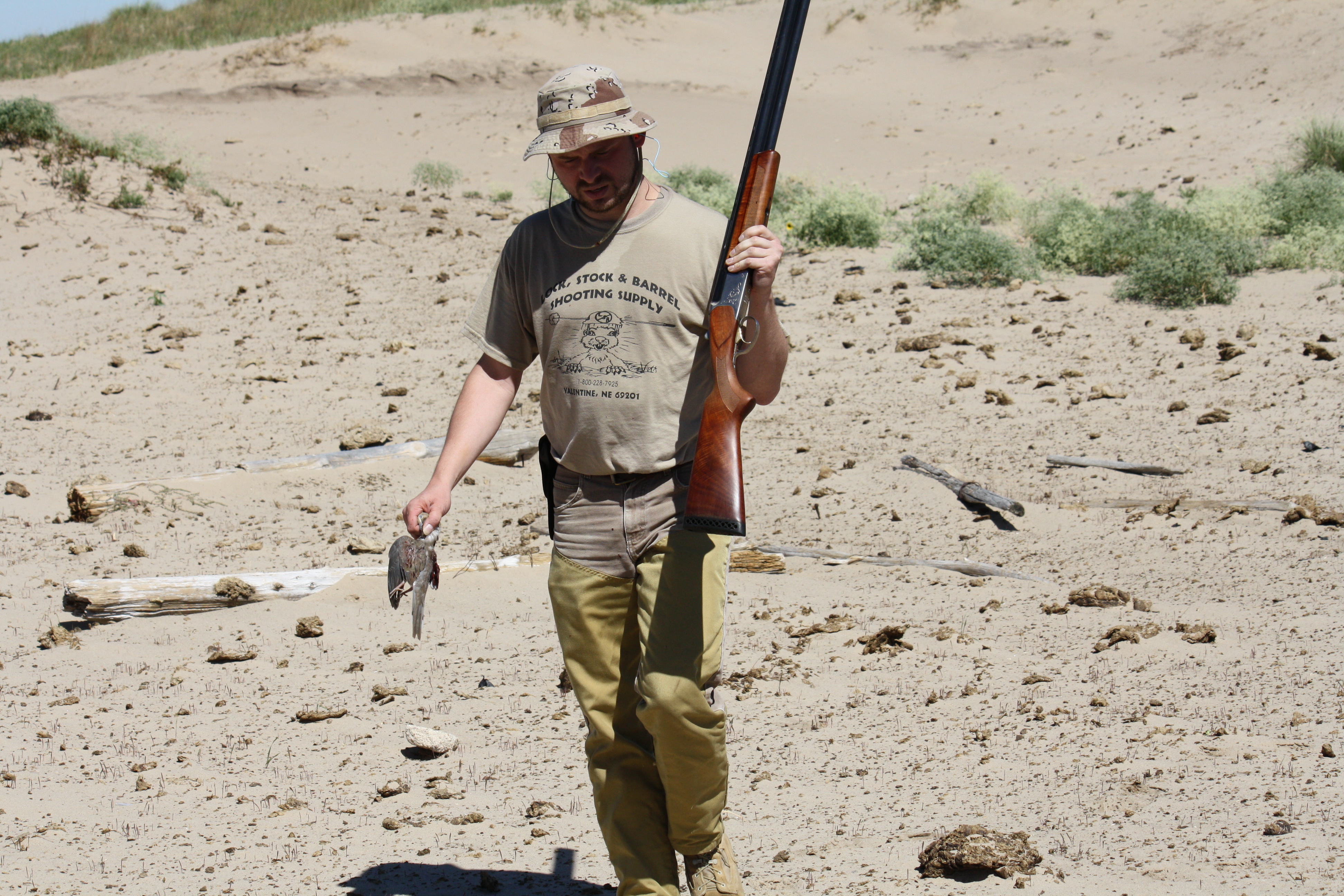
Mike, his dove and his Baikal 12 gauge over/under

Once the day heated up, we decided to pick a windmill and set up some decoys.  As the windmills are the sole source of water on the open prairie, the doves cannot resist flying in.

Dove Hunting

Sam and Sue help Charles set up at the windmill

Dove hunting

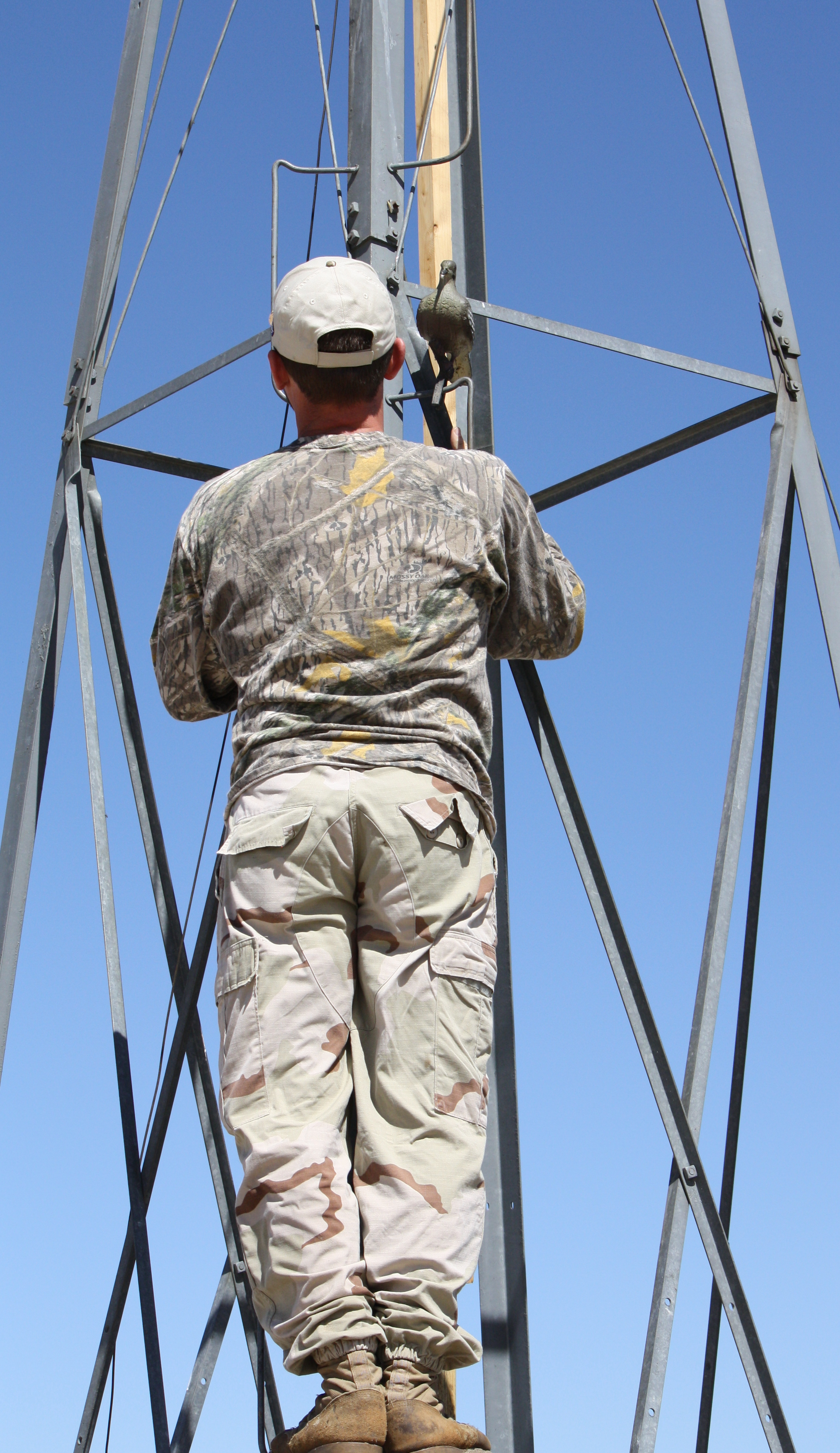
Charles setting up dove decoys on the windmill

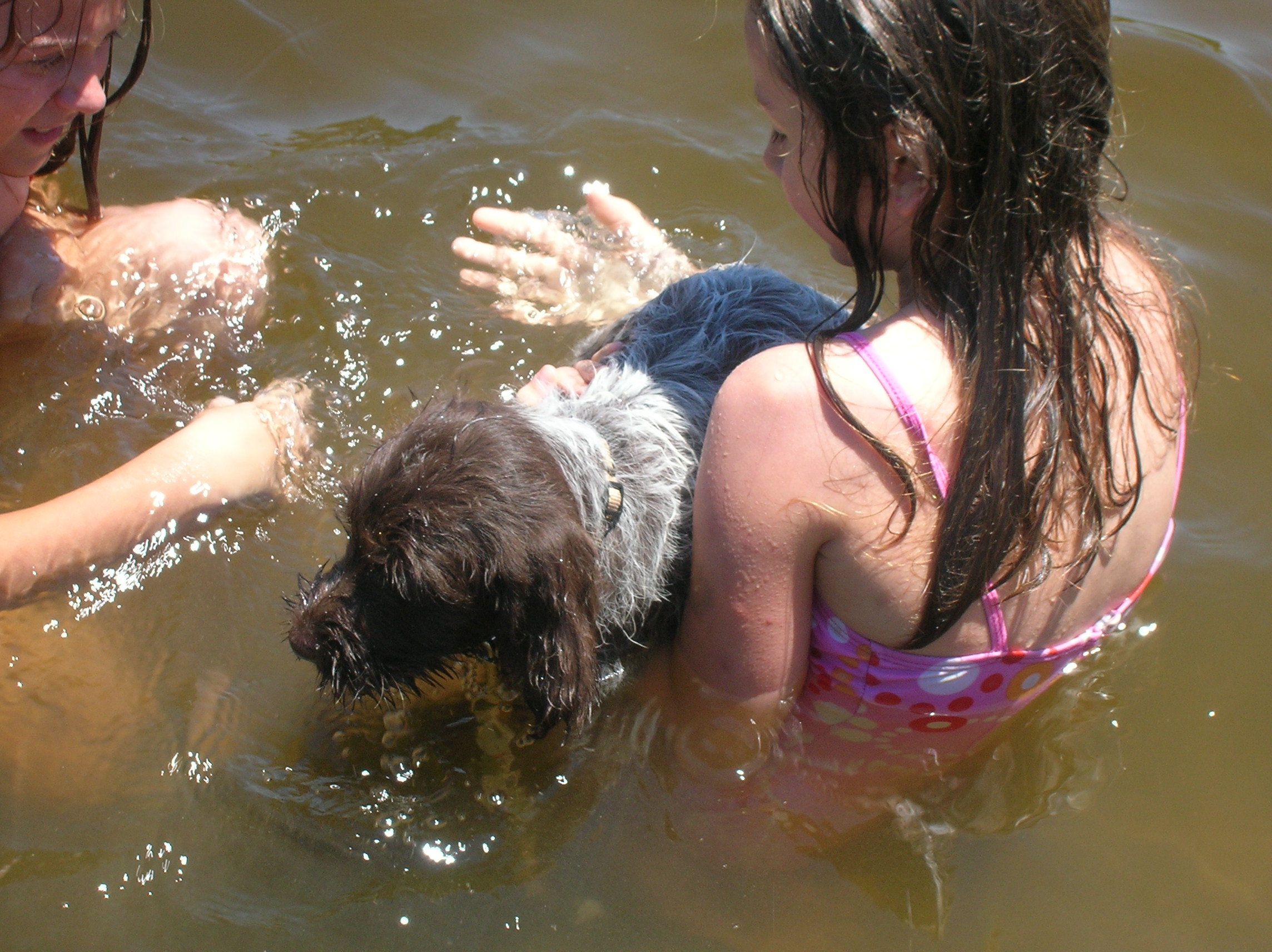
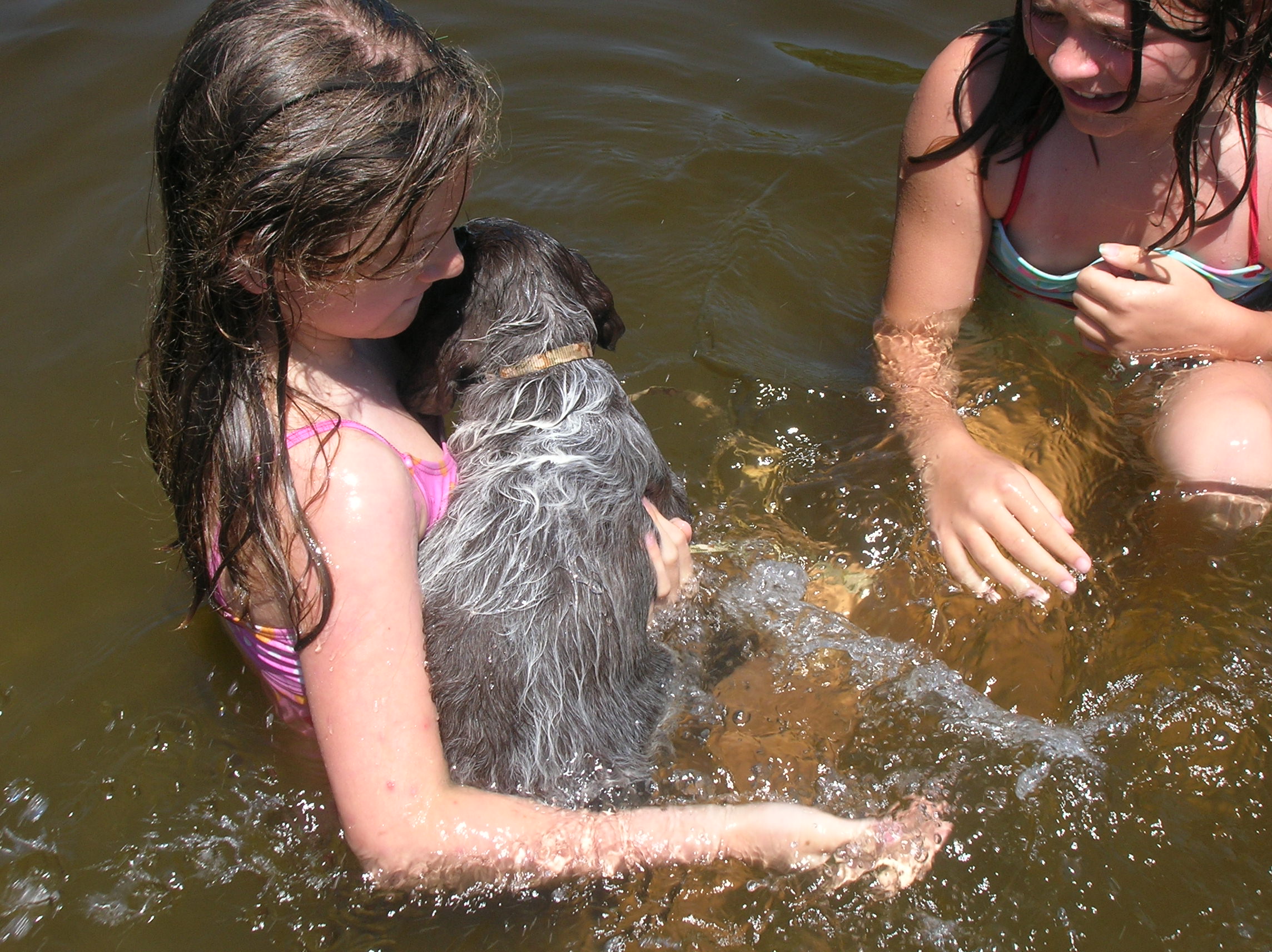
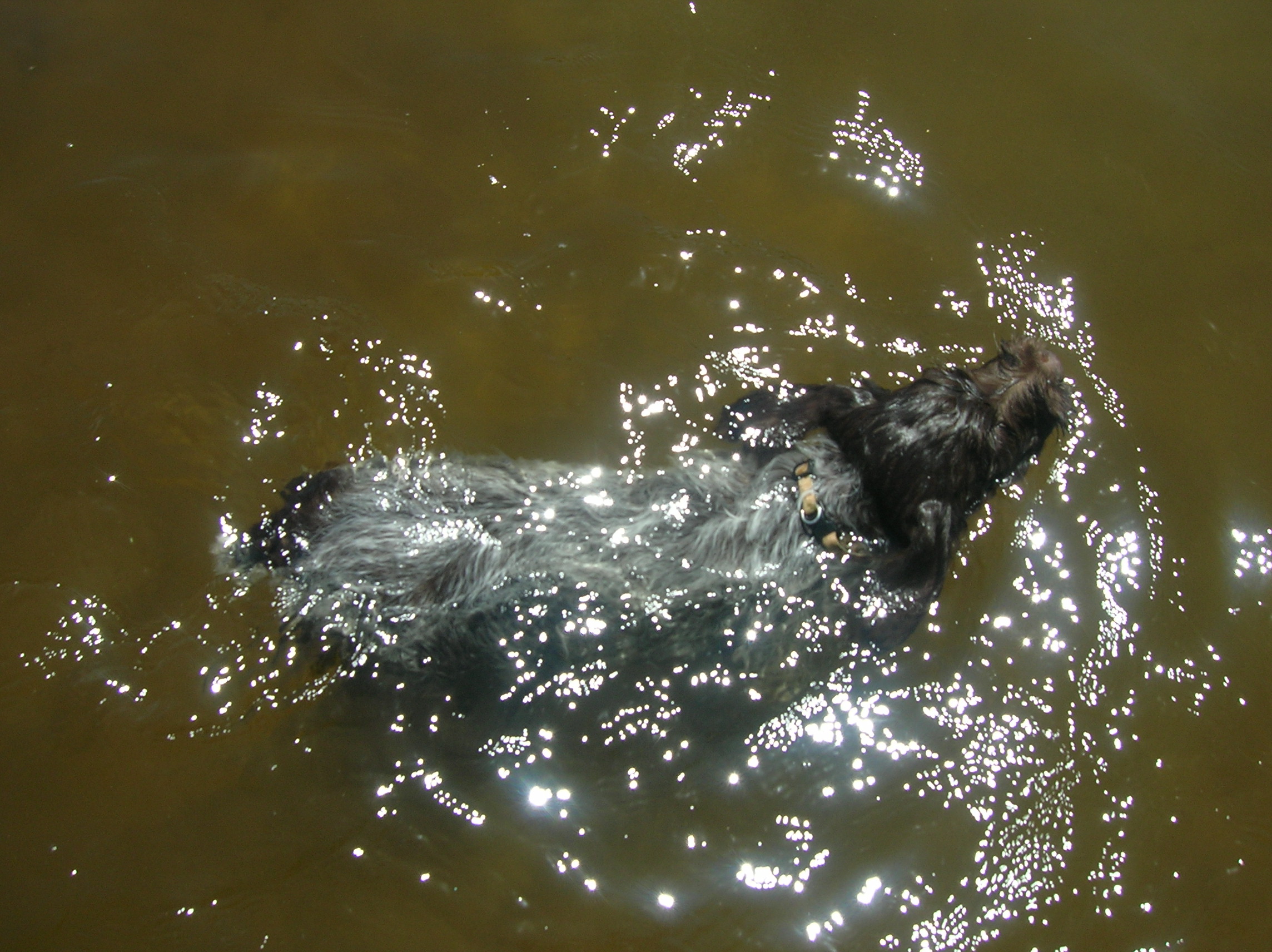
Prior to getting settled in our spots, we let Sam and Sue out of the truck for a break.

Wirehaired Pointing Griffon

Sam cools off in the stock tank

Wirehaired Pointing Griffon

Sue cools off in the stock tank

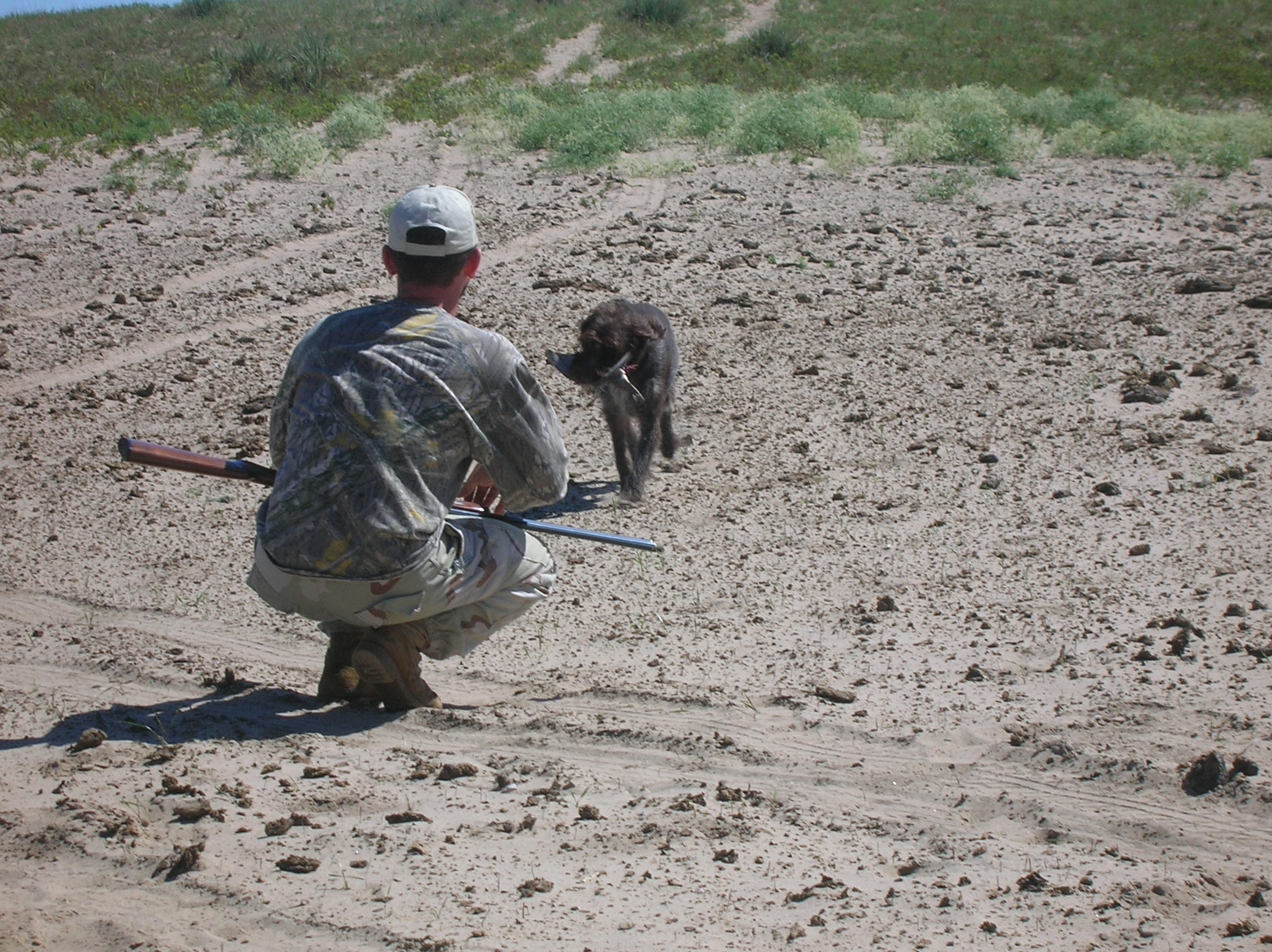
For awhile we had Sue sit with us at the windmill and used her to retrieve our birds for us, just for fun and practice.

Wirehaired Pointing Griffon

Sue retrieves a dove

I was primarily focused on taking pictures, but towards the end of the day I took up Charles’s 12 gauge and was able to take a dove.

Me, my dove and Charles’s SKB 12 gauge over/under

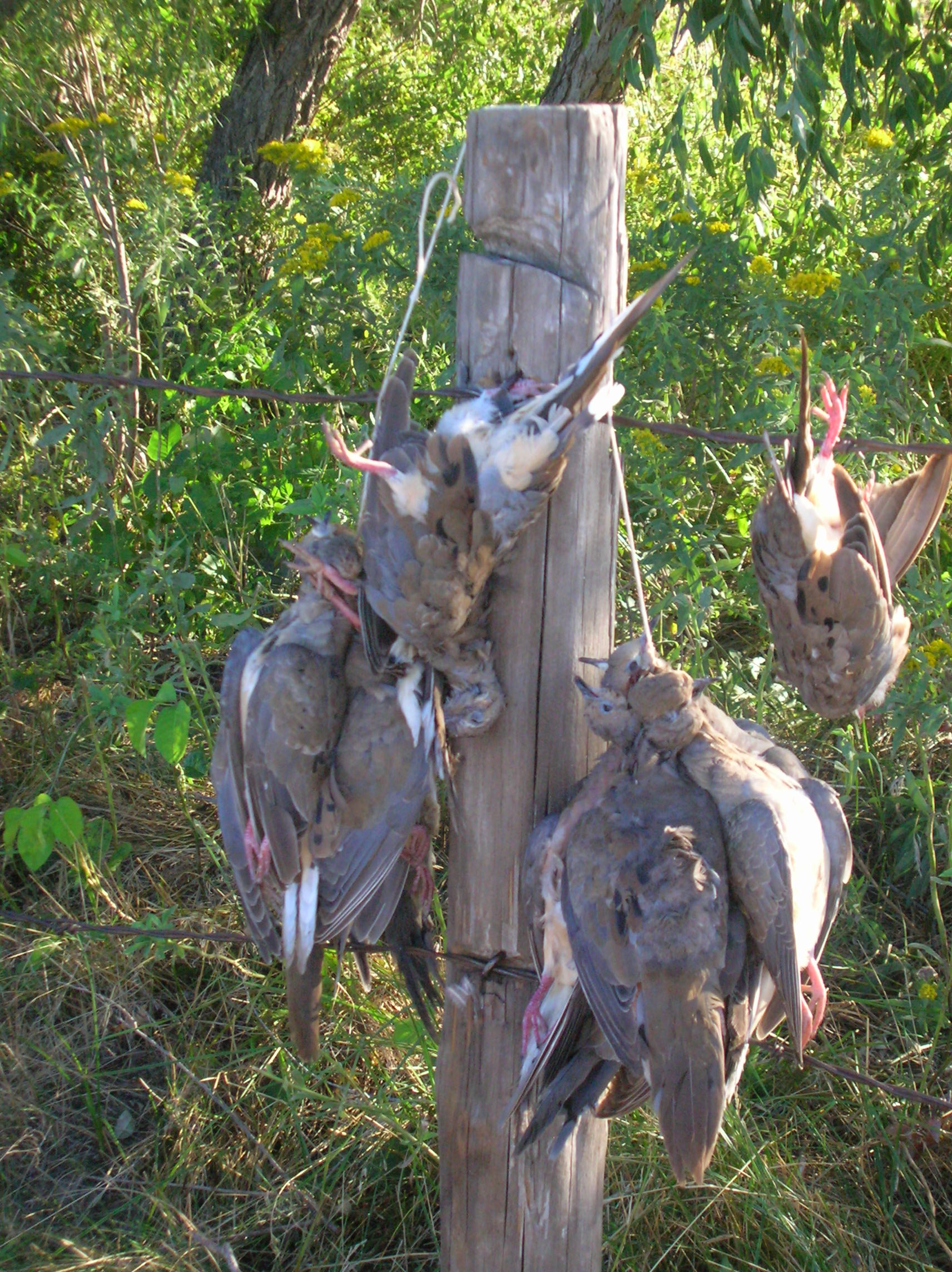
Dove hunting

Saturday’s dove total: 13

The birds have since been cleaned and eaten in a corn stuffing.

Book Review: Gun Dog by Richard A. Wolters

7 Comments

“From his prehistoric beginnings man has possessed two things: woman and dog.”

The humorous (if slightly misogynistic and outdated) first sentence of Wolters’ iconic training manual gives you a hint as to what lies in store in its concise 148 pages.  It is a starting point.  It is basic.

For Wolters, a hunting pup’s training life begins at 7 weeks.  Based on my experience with a litter of pups this year, I would agree.  I actually began working on crate conditioning and other basic commands at 5 1/2 weeks.

These are not advanced techniques.  Wolters takes you through the beginnings of the basic commands of sit, stay, come, and whoa.  There are other techniques provided to assist in bringing out the dog’s natural pointing and retrieving instincts.  The book has as many instructional photographs as words taking you through the process.

He then covers the second phase of training: quartering a field, the use of hand signals, fetch on command, introduction of the gun, water retrieve and honoring another dog’s point.

If you plan on training your own dog and need a place to begin, this is it.  I would estimate that his process takes you through the first 6-12 months of yard/close field work.  The time frame depends on how much time you put into it: the more time spent, the shorter the process.

Random aside: Turning to the advice of your local chapter of the North American Versatile Hunting Dog Association chapter is something that I also recommend.  This is a resource that we did not take advantage of in the past, but plan to utilize to the fullest extent with any new dogs in the future.  Here is the list of chapters and contacts: http://www.navhda.us/chapterinfo.aspx)

Wolters was not a professional dog trainer.  He was educated as a chemist but had a passion for hunting dogs that shows in his writing.  His goal was to produce a text enabling the amateur with limited time to effectively work with his or her dog, and I believe that Gun Dog succeeds in achieving that goal.

http://www.amazon.com/s/ref=nb_sb_noss?url=search-alias%3Dstripbooks&field-keywords=Gun+Dog+by+Richard+Wolters&x=0&y=0

Introducing AKC California Fortune Sweetgrass

Leave a comment

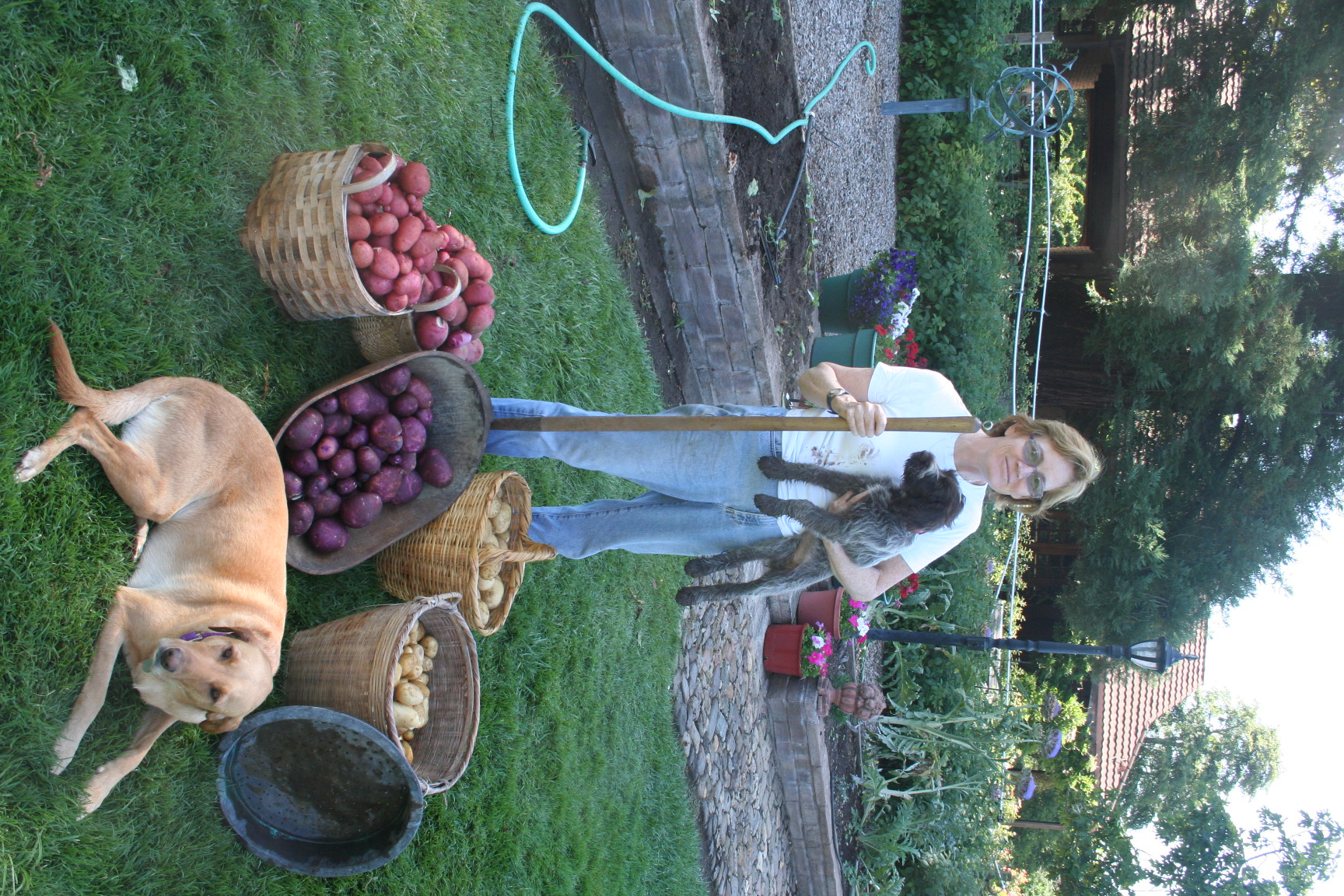
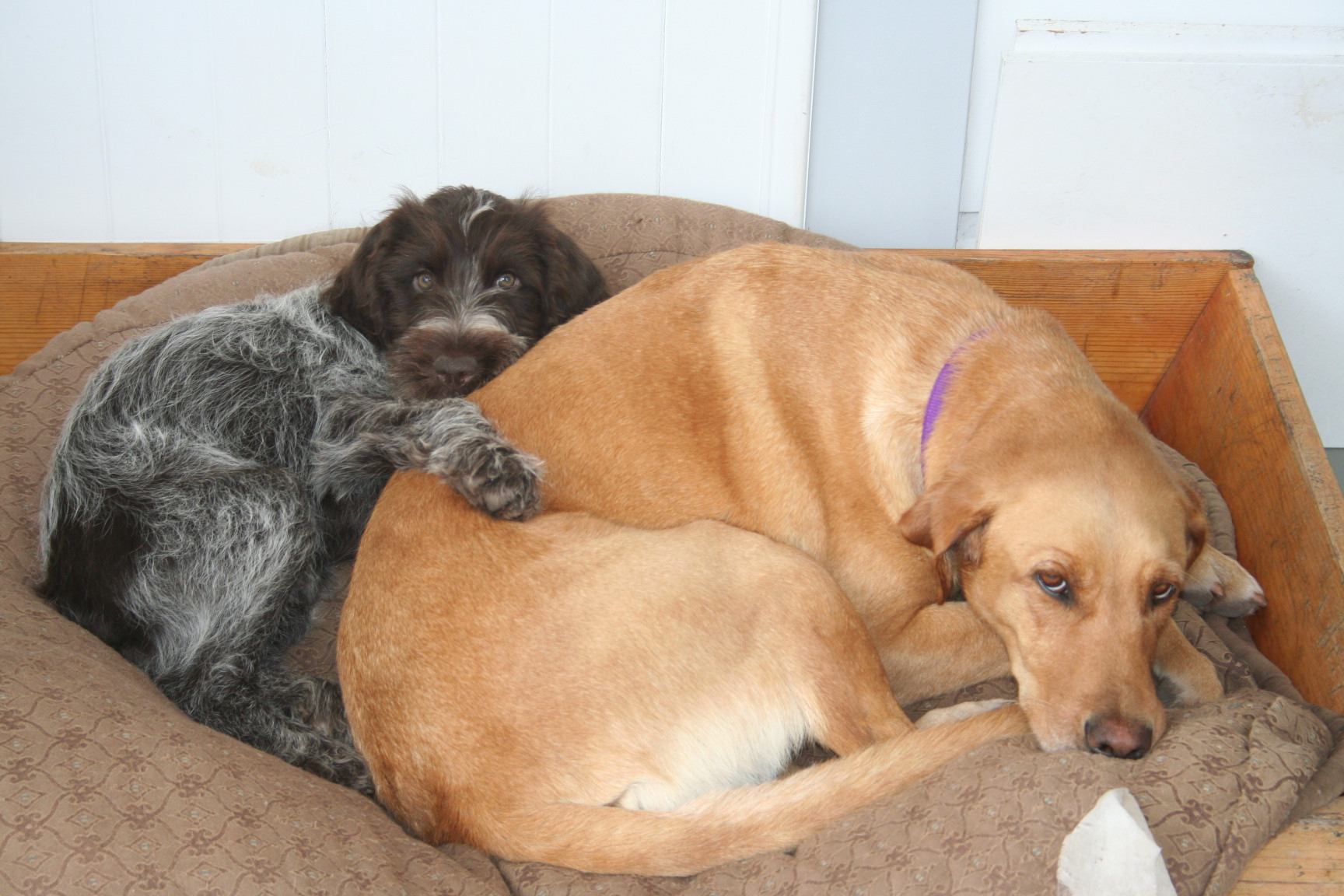
I received some great photos of Female 2.2 (our 2010 litter) yesterday from Hank and Linda.  The pup is almost 3 months old, now known as Cali and registered with the AKC as California Fortune Sweetgrass.

Wirehaired Pointing Griffon Puppies

Cali, Linda, a great potato crop, and the yellow lab

Wirehaired Pointing Griffon puppies

Having a rest

Wirehaired Pointing Griffon puppies

Cali and Harry relaxing at the vineyard

If you ever desire a vineyard experience in Sonoma wine country in California, the Wetzel family has the beautiful Alexander Valley Vineyards to accommodate your needs.  You can find them on the web at http://www.avvwine.com/ ( Which reminds me, I need to order some wine from them).  We plan on paying them a visit ourselves next summer.

Whiskey Update

Leave a comment

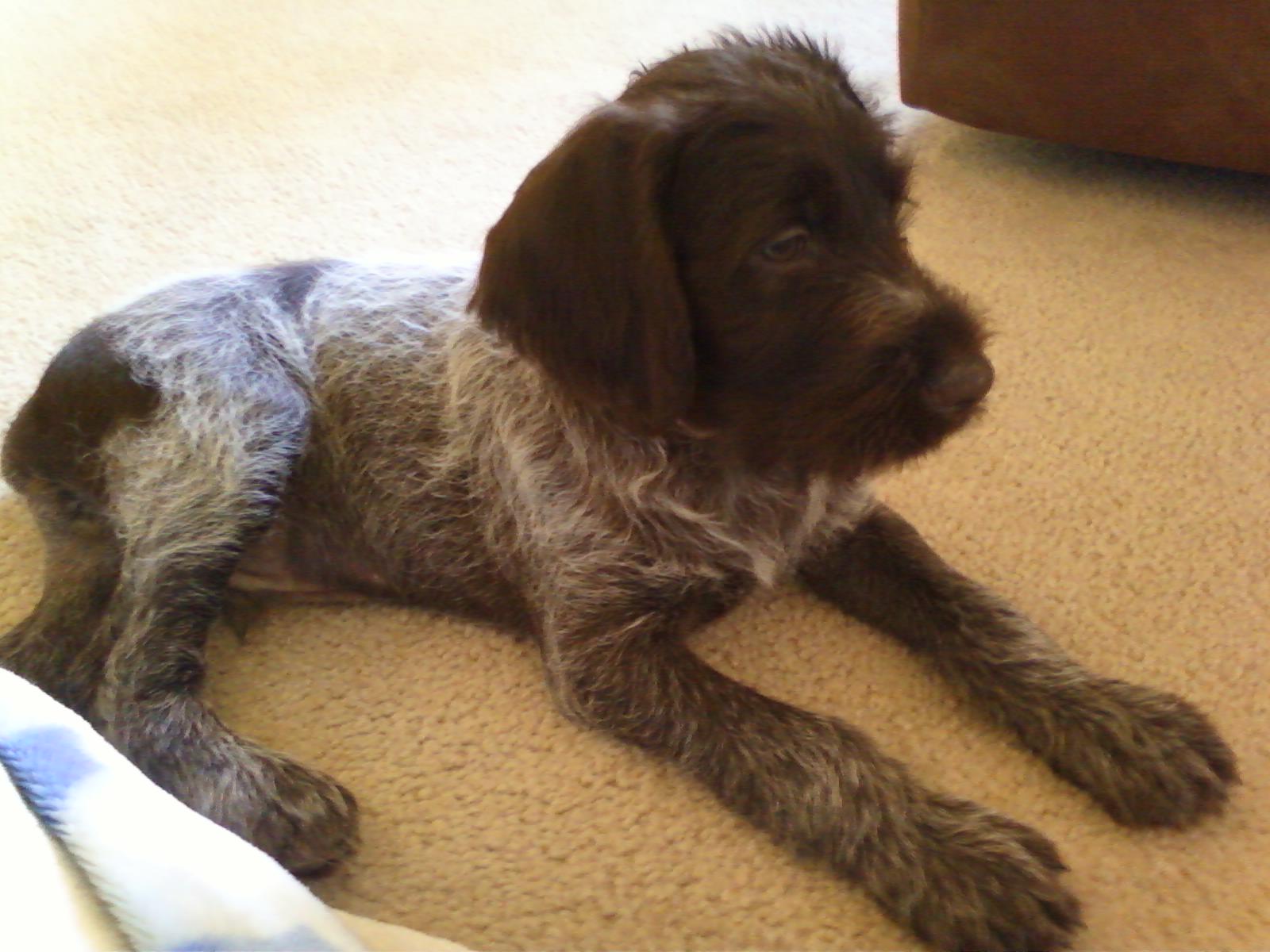
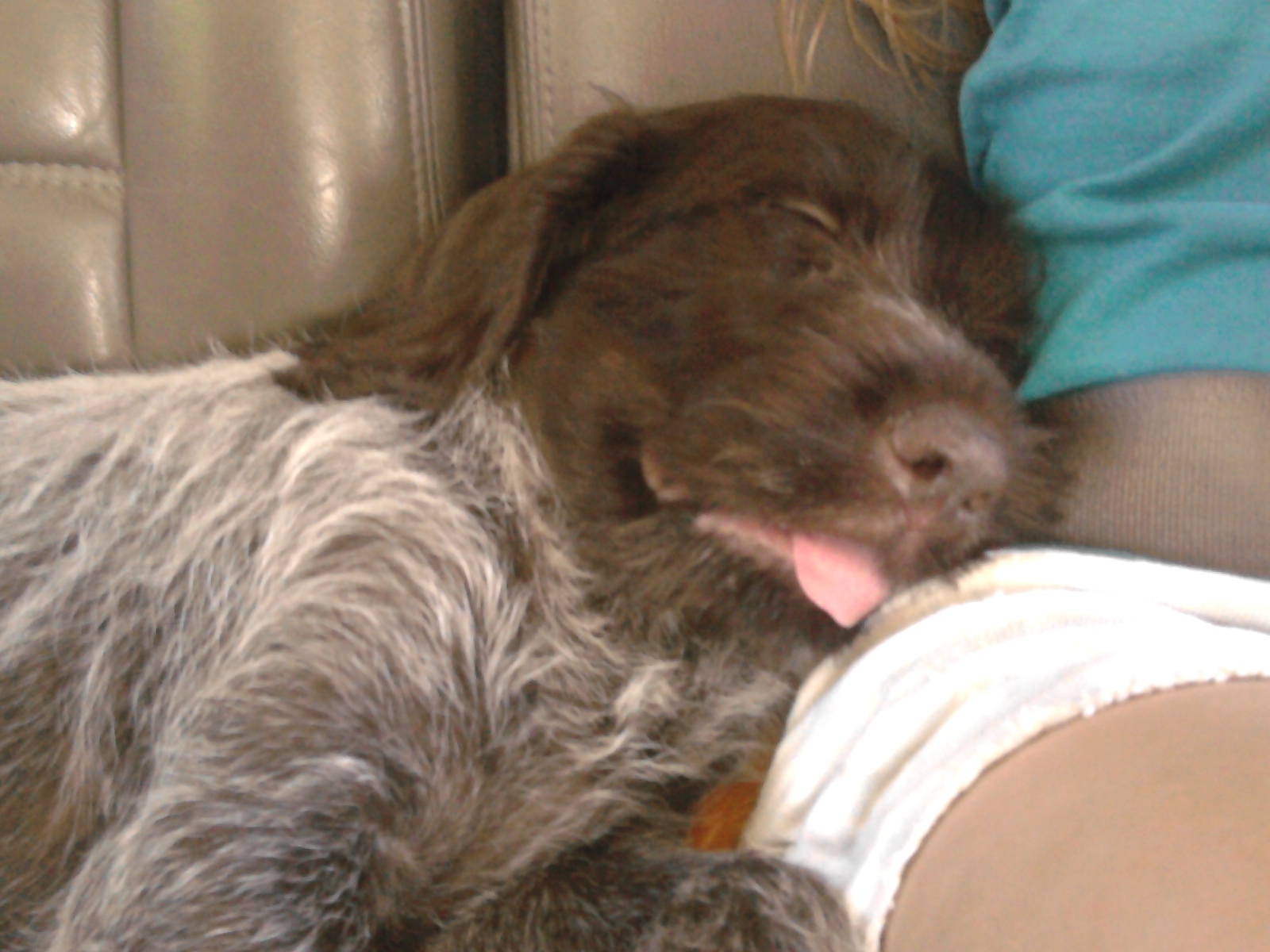
Pete and Deborah in Nevada have been sending me some cute pictures of Whiskey (Alpha Male) that I had to share!

Wirehaired Pointing Griffon puppies

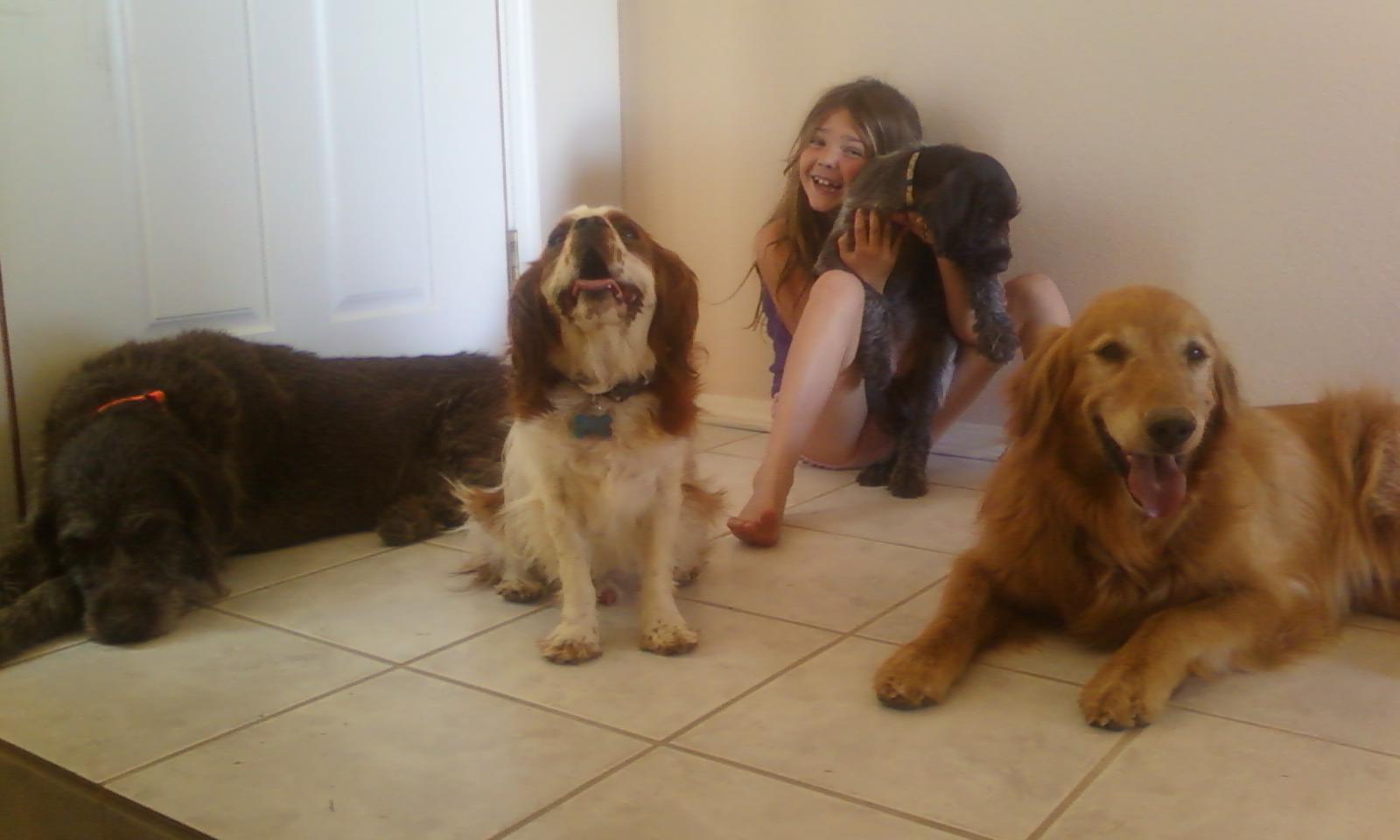
Basco, a fellow Wirehaired Pointing Griffon, Yogi the Cavalier King Charles Spaniel, Whiskey with Andrea, and Dewey the Golden Retriever

Wirehaired Pointing Griffon puppies

Say what?

Wirehaired Pointing Griffon puppies

Growing up fast

Wirehaired Pointing Griffon puppies

Chilling out after ice cream on a hot day

Wirehaired Pointing Griffon puppies

Chewing up a pine cone

Wirehaired Pointing Griffon puppies

Two griffs on a bed after a day of chukar training

Thanks to Pete and Deborah for the great pics!

NAVHDA: A whole new bird game

1 Comment

To use an analogy, NAVHDA is to hunting what rodeo is to ranch work.  Both rodeo and NAVDHA training/testing take a practical skill set and turn it into a technically judged event.  As Chuck Johnson says in his book Training the Versatile Hunting Dog, “You can successfully train your dog and end up with a brag dog without participating in one of these (NAVHDA or VHDF) tests” (p 124).  A few members and trainers at the Heartland NAVHDA Chapter’s training day even said that NAVHDA testing takes away skill from the field and vice versa (the field takes away skill from the testing).

Sam is starting the NAVHDA process at the age of two.  I think this works to our advantage and disadvantage.  The advantage is that he has solidified his natural field skills hopefully to a point where any training we do on the table or in the yard won’t have an adverse impact on his natural ability.

Yet this also proved to be a disadvantage on our first run at the NAVDHA training.  Sam had never been trained using pigeons or bird traps (or bird flingers, whatever you want to call them).  Once he found a trapped pigeon, he wasn’t even sure if he was supposed to be pointing it.  The decision was made to take the pigeons out of the traps and replant them.  The pigeons were replanted, but when Sam approached them, they didn’t move.  The only birds in the hunting field that don’t move are either dead or wounded, so naturally (in his mind) he grabbed it.

Further adjustments were made to the training scenario, because at that point we all realized that Sam was confused.  A pigeon was flushed by kicking the grass, then a shot was fired, just to attempt to impress in his mind that we are actually trying to “hunt” these things.  We then broke it down further, to where one of the trainers played with a pigeon about 5 feet in front of Sam, while Charles was giving the “whoa” command, to show that he is not allowed to grab the bird.

Wirehaired Pointing Griffon

Sam watching the pigeon while on "whoa"

Another challenge in the training field was the number of dogs that had passed through and scent marked.  Sam thought that he had to “mark” as much as possible.  This isn’t something that we’ve ever had to worry about, even at our dog training wildlife management area.  Yet as it is a display of dominance, we need to correct him for “marking” at inappropriate times.

Even though there is a part of us that is wondering if this is something that is truly necessary, we really want to push ourselves in this direction.  The Heartland NAVHDA Chapter is full of breeders and trainers who have multiple decades of experience under their belts.  As an example, we worked with the folks out of Rufnit Kennels (http://www.rufnitkennels.com/) who are probably the #1 breeders and trainers of the Bracque du Bourbonnais in the country.  They have 20 dogs who live with them in the house!
Bracque du Bourbonnais

Sheri Stueck of Rufnit Kennels and "T"

So even though Sam has hunted up and retrieved 75+ wild birds in his first two seasons, we have set up a new challenge in trying to get him ready for testing.  Due to the special situations that are presented in NAVHDA training/testing (even having a large group of people walking behind him was confusing for Sam), we will need to start from the beginning in many ways.  We’re already looking forward to the September 11th training session, where as an experiment I plan on taking Sue out in addition to Charles running Sam.  We truly appreciate the opportunity to learn new things about versatile hunting dog training.

The last pup homeward bound

Leave a comment

Alpha Female took the direct flight from Omaha to Atlanta this morning.  The last word from the happy new owner was that “Maggie” was laying in his lap as he was driving back to Alabama.

Wirehaired Pointing Griffon puppies

My last goodbye for the year

Kudos to Delta Pet First/Air Cargo for the shipping of these pups.  Every pup showed up on time and well handled.  The guys at the Omaha facility were helpful in every way.  I plan on working with them exclusively for my air shipments going forward (I did not receive any compensation for that plug, it is an honest recommendation).

I’m trying hard to keep myself from looking at the Wirehaired Pointing Griffon puppy ads online.  There is a female pup out there that I have my eye on, but I should really hold out to see if we can get a foundation animal next year from either Holland or France.

My blog writing calendar is going to become a little more sporadic now that the puppies are gone.  I’m looking forward to doing some book reviews, pup training articles, pedigree profiles and adult dog training updates before the hunting season starts, but my three kids would really like to soak up some of my attention now that the pups are gone.

Charles and Sam will be working on “steady to wing and shot” at the NAVHDA Heartland Chapter’s training day on Saturday, so that will be my next installment.  Until then…

Pup in the pasture

Leave a comment

The clouds and rain finally dispursed yesterday evening, so we headed down to the local dog training wildlife management area to give Sue, Sam and the last pup (Alpha Female) a big run.

Wirehaired Pointing Griffon puppies

Sue, Alpha Female and Sam

Half of the WMA had been grazed by a herd of cattle, which made the area easier to negotiate.  The other half would have been difficult for the pup and my kids to wade through, since the grass was waist to shoulder high, typical for the tallgrass prairie ecosystem.

Wirehaired Pointing Griffon Puppies

Getting a good run in

Wirehaired Pointing Griffon puppies

Full speed ahead!

Fun was had by all!

Wirehaired Pointing Griffon puppies

Charles, Alpha Female, Sam, and Sue on the cow trail

The old farmer saying about corn was “knee high by the Fourth of July”.  This year, it is more like “head high”!

Wirehaired Pointing Griffon

Sue and big corn

Alpha Female flies to Atlanta on Thursday, with her final home destination of Alabama.  It will be time for us to focus on polishing up our training on Sam and Sue, while getting some pedigree research done (Pedigree Profiles are coming to the blog starting July 11th).

We are looking forward to the Heartland NAVHDA Chapter’s Training Days on July 10th and September 11th, with our eyes on the big prize of sharptail grouse and prairie chicken opener in my Nebraska Sandhills on September 18th.

We will miss the little pups, but are pumped up for a great hunting season and Sam’s NAVHDA Utility Preparatory Test.

Male 2.1 meets his family

Leave a comment

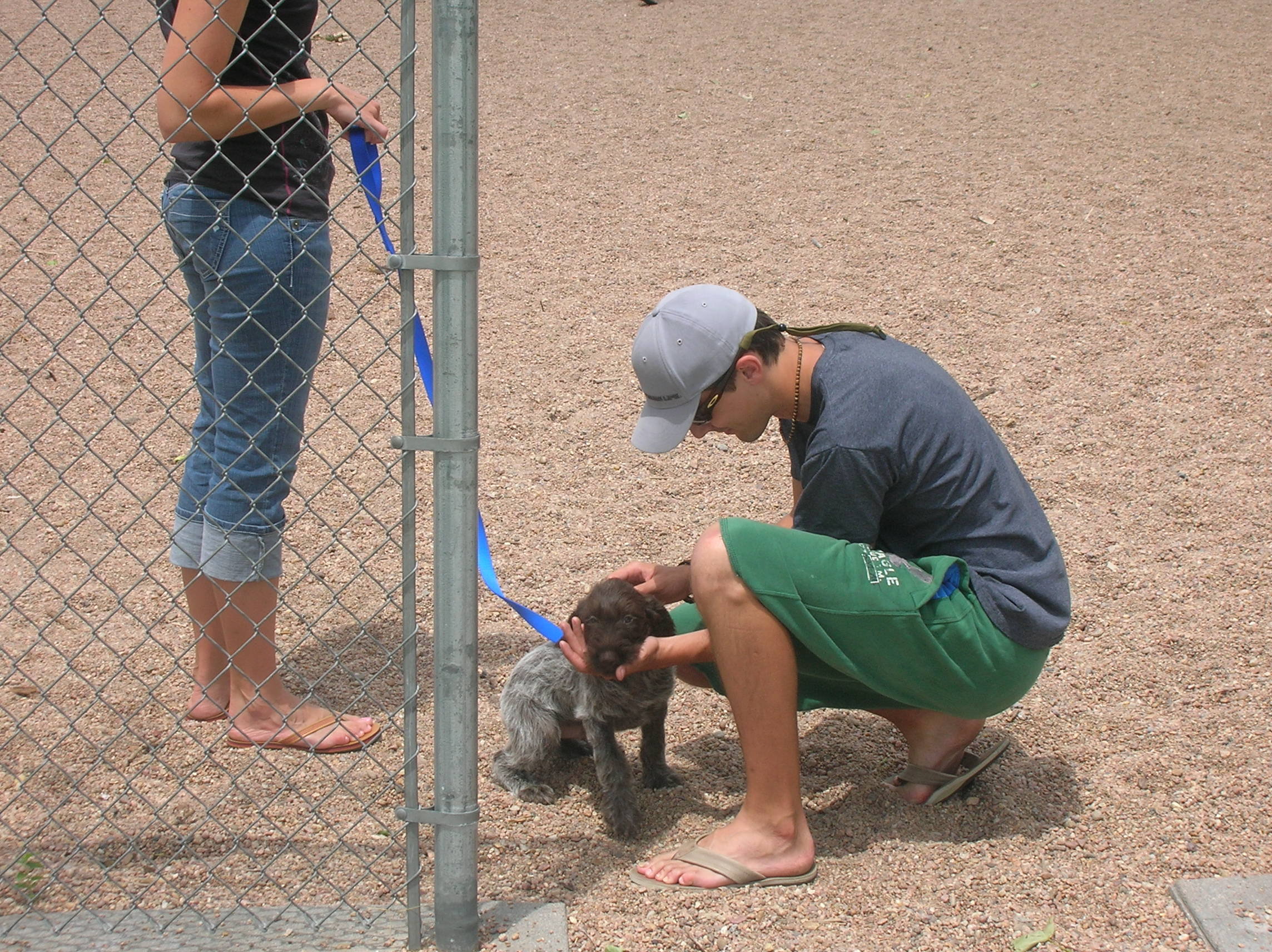
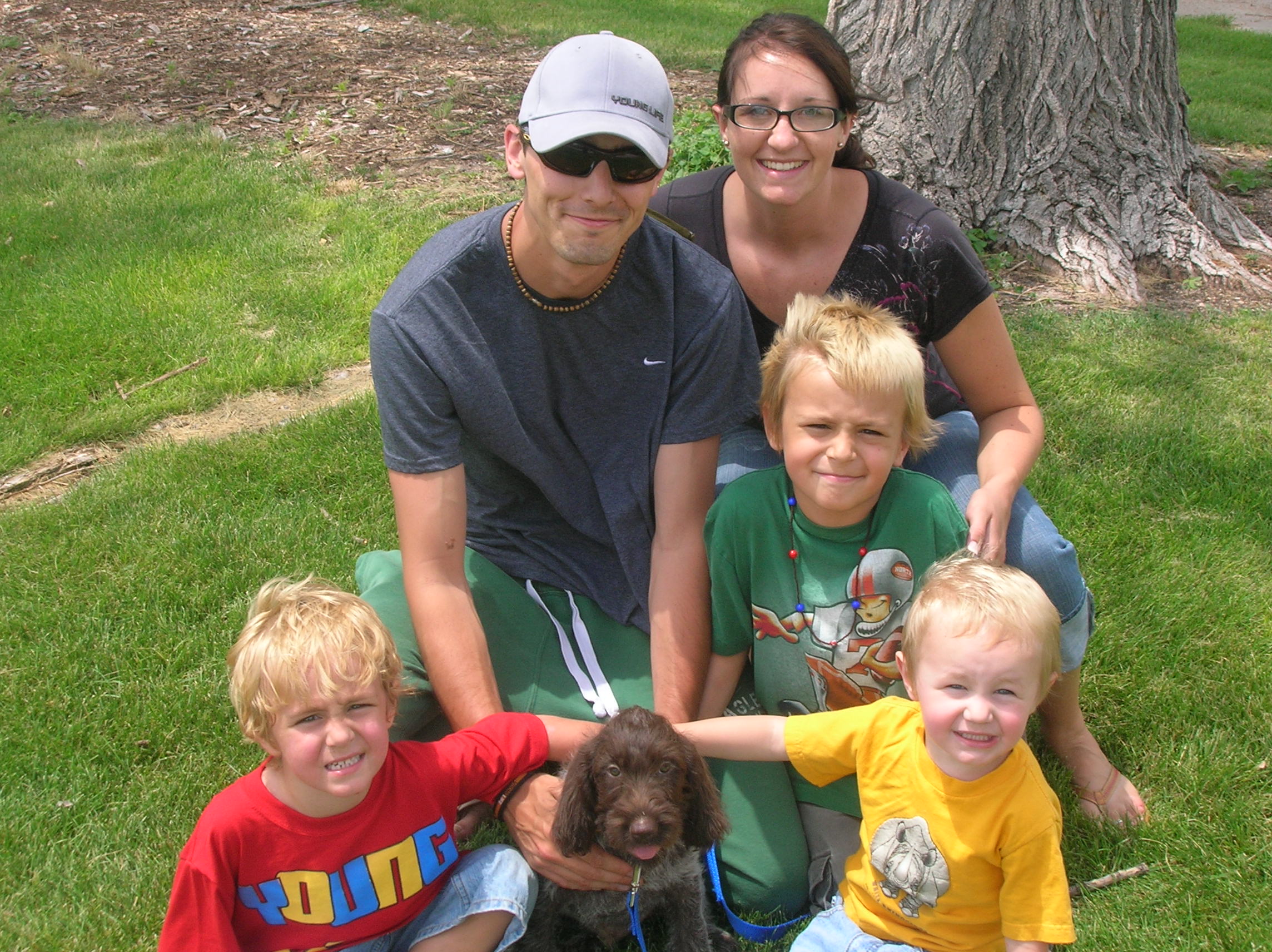
Sean, Amber and their beautiful family from Wyoming met us yesterday in Centennial Park in North Platte, Nebraska.  “Gauge” will be a part of a young hunting family, with grandpa leading the way with training and hunting expertise.  Sean is eager to begin training and I suggested several books to assist in the process, which I will be reviewing on the blog in the coming weeks.

Wirehaired Pointing Griffon puppies

Sean and Amber get to know Gauge

Wirehaired Pointing Griffon puppies

Family Picture

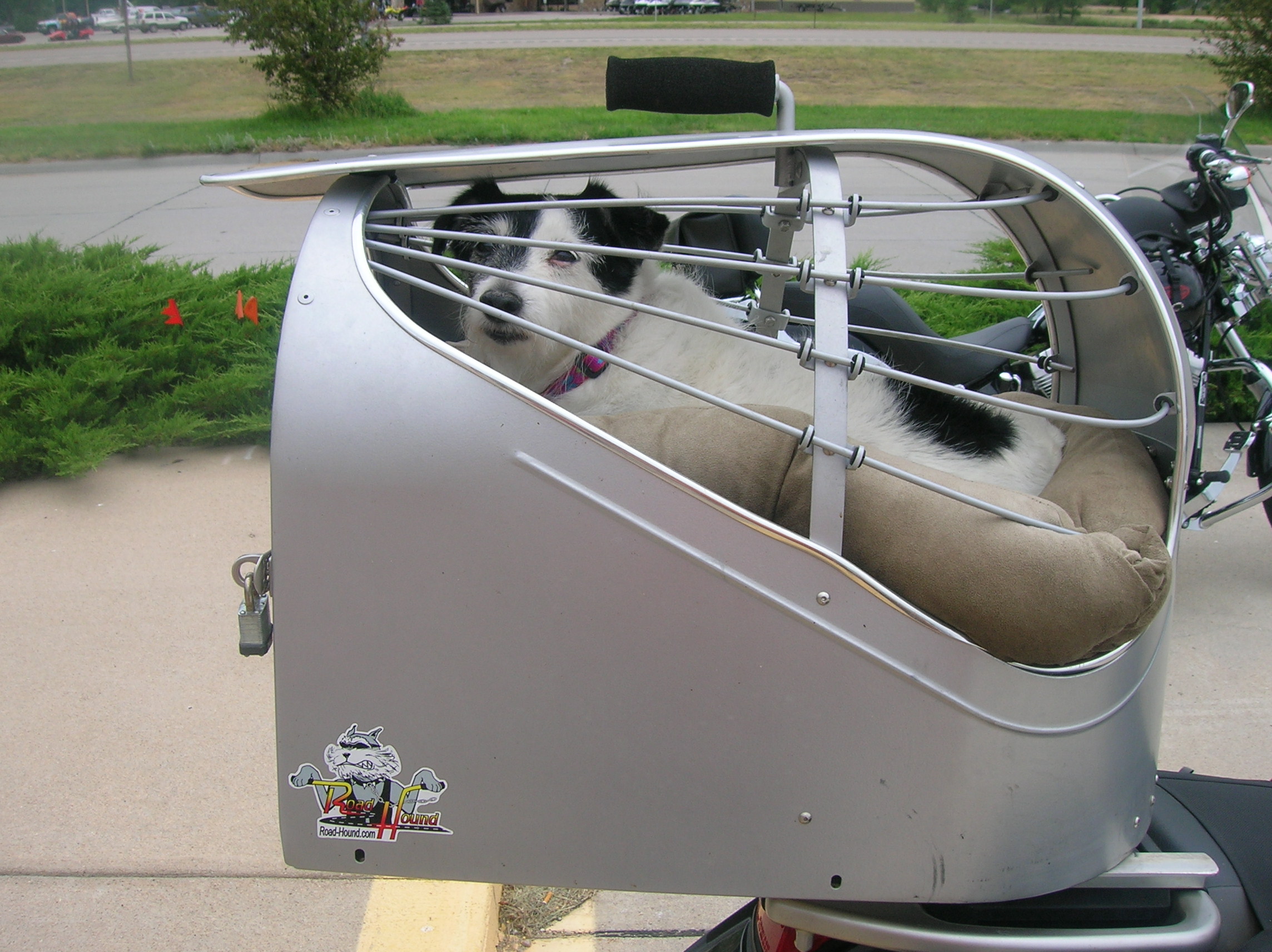
Some random notes from our trip.  We stopped for lunch at Skeeter Barnes in Kearney.  On our way out of the restaurant, we spied this interesting way to transport a dog on a motorcycle.  I couldn’t resist sharing.
Motorcycle Dog

Born to be Wild

On our way home, we stopped at another Kearney destination, the Archway Monument.  We had visited “the arch” on a previous excursion and the kids begged for a return trip.  If you ever need to get out of the car at this point and have a half-hour to spare, it comes highly recommended in my book, especially for kids.  The Archway Monument is a totally immersive and interactive exhibit covering the history of the Great Platte River Road from the prairie schooner to the Porche.

Archway Monument

Archway Monument, I-80 at Kearney, Nebraska

It is a rainy Fourth of July thus far in Bellevue, but hopefully the skies will clear in time for fireworks.  Best wishes to all of you for the holiday!

All-terrain pups

Leave a comment

We needed a change of setting yesterday, so I drove the pups over to Papillion to Walnut Creek Recreation Area, managed by the Papio-Missouri River Natural Resource District.  It is truly a nice little spot, few people and plenty of hills replanted in native prairie.

Wirehaired Pointing Griffon puppies

Nosing around upon arrival

We made our way down to the pond, where they couldn’t resist the attraction of swamp stink.

Wirehaired Pointing Griffon puppies

Frog hunting

Wirehaired Pointing Griffon puppies

Alpha Female swamping

Wirehaired Pointing Griffon puppies

Male 2.1 swamping

The pups are very used to the dense forest floor forb cover, but I made a point of walking through some different types of heavy cover in this open setting.

Wireharied Pointing Griffon puppies

Busting through native prairie

Wirehaired Pointing Griffon puppies

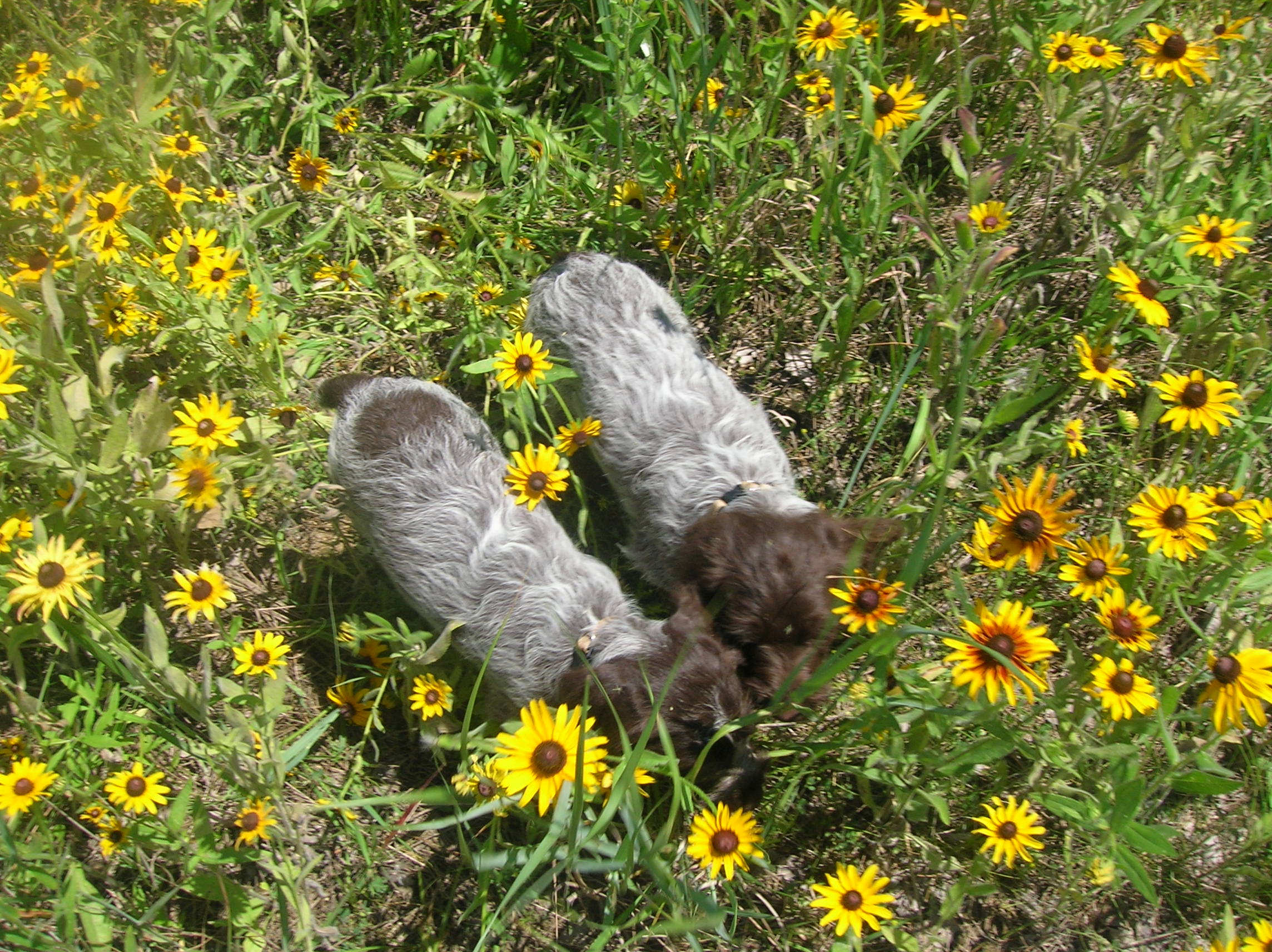
A run through the wildflowers

Wirehaired Pointing Griffon puppies

Back to the swamp for some cattails

We mucked about the place for a good hour or so, walking up into the hills, then dipping back down by the pond.  These pups are going to homes in Alabama and Wyoming and the cover will be much different, but it is good to expose them to a variety of cover types,  so that they are not afraid to hunt in new places.

Swimming Puppies!

Leave a comment

The road to the private pond is washed out from the flood, so yesterday we took the drive out to Two Rivers State Recreation Area for a swim.  The sign said “no pets allowed” on the beach, but I had driven nearly an hour to get to a 50 ft. by 10 ft. area of sand on a 1 acre pond (yes, lame), so I was willing to take the risk.

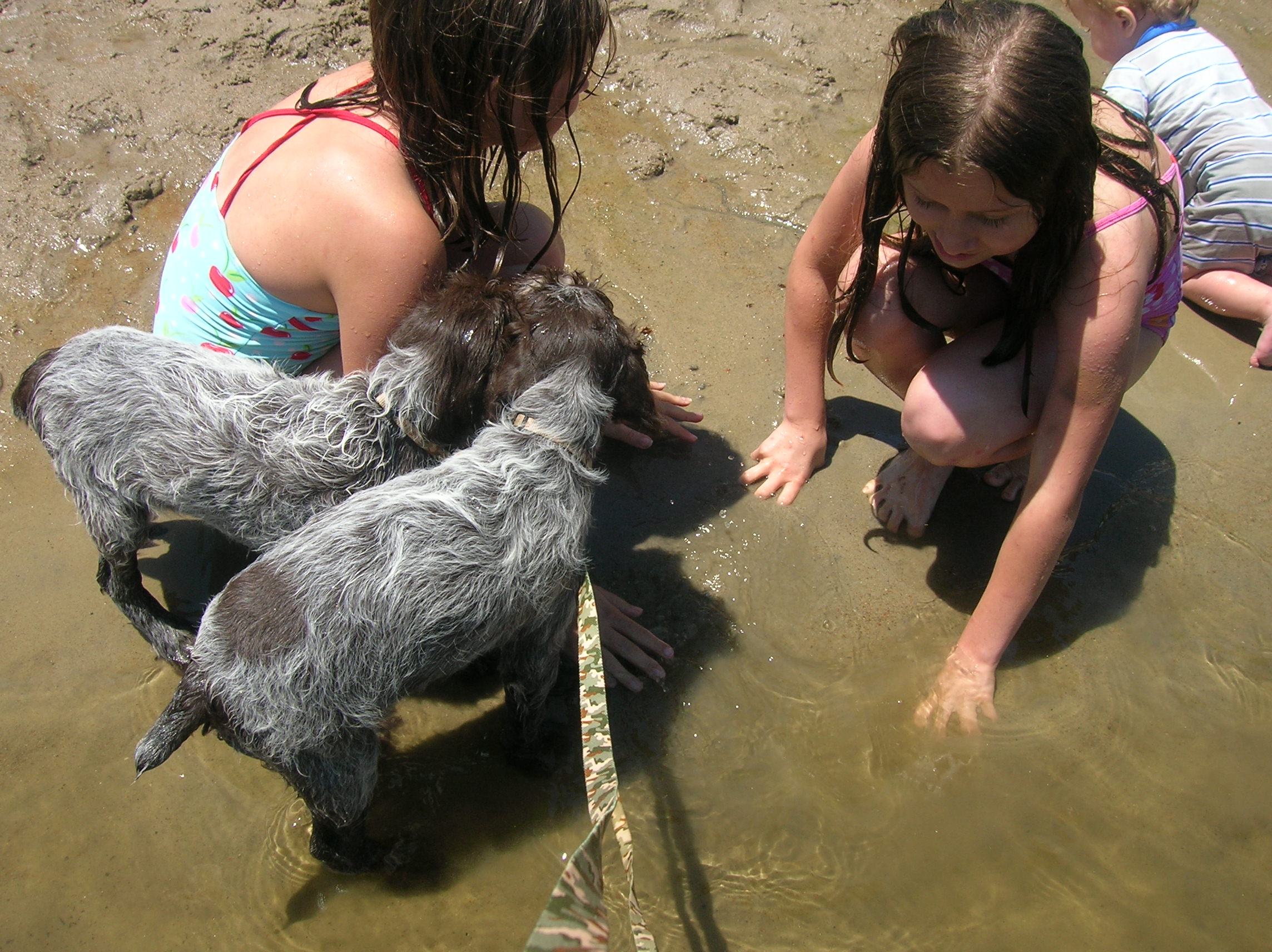
I started off by letting the pups hang out with the kids in the very shallow water.

Wirehaired Pointing Griffon puppies

Checking out the water with the girls

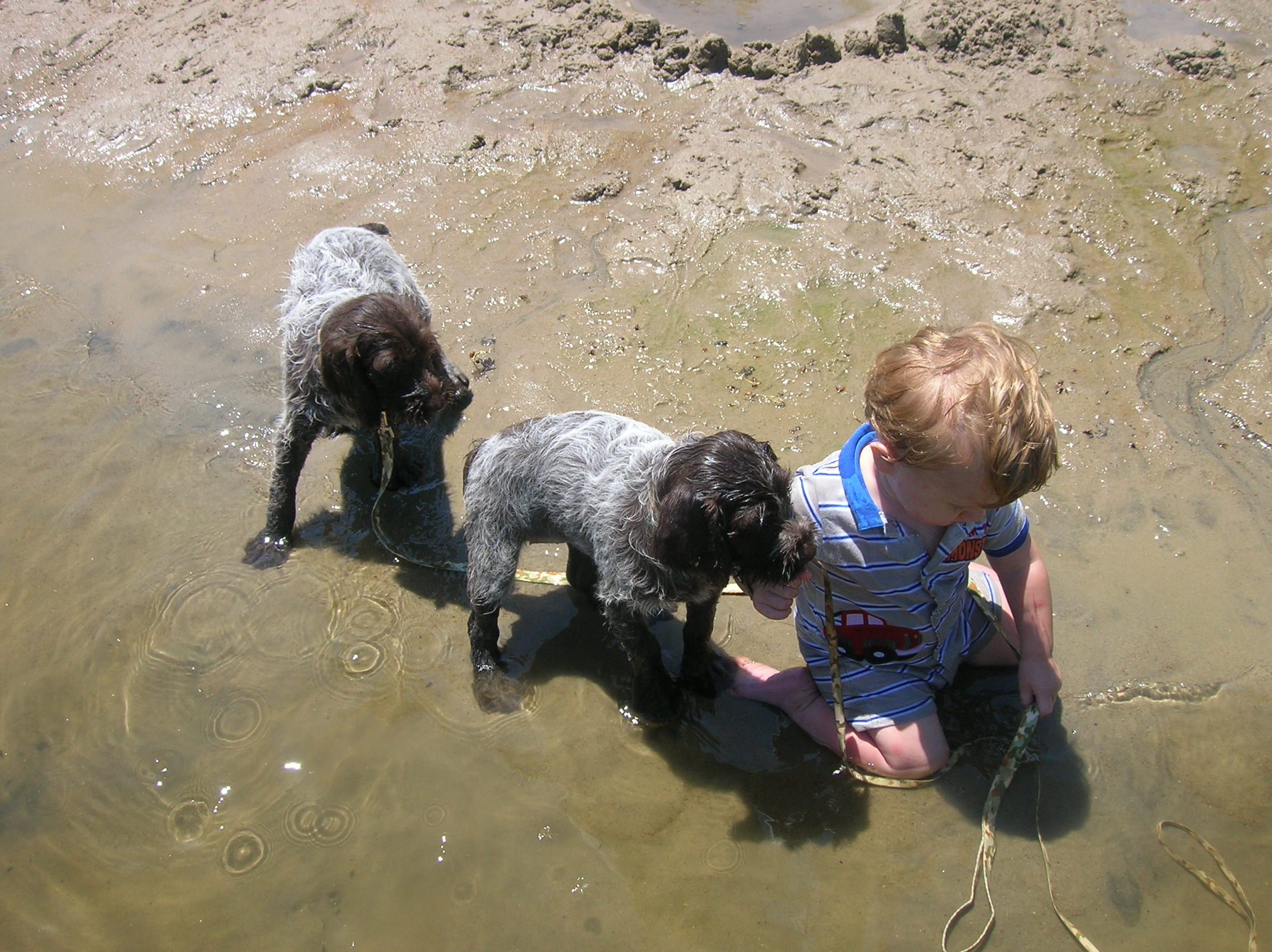
Wirehaired Pointing Griffon puppies

Checking out the water and Caleb

The next step was to have Cordelia take a pup out into the water and get it wet, the same way I did a week or so ago in the kiddie pool.  It has to be all positive, with lots of praise and encouragement.

Wirehaired Pointing Griffon puppies

Male 2.1 gets wet

Wirehaired Pointing Griffon puppies

Alpha Female gets wet

Finally, I took them out one at a time into a little bit deeper water.  I petted the pup, got it wet, then set it into the water, holding on to its torso with its legs hanging free into the water.  When I saw its legs start to make dog paddle motions, I let it go to swim!

Wirehaired Pointing Griffon Puppies

Male 2.1 swimming

Wirehaired Pointing Griffon puppies

Alpha Female swimming

Both during and after their little swims, I lavished praised on them.  It was not my ideal introduction to water, but it was what I had available at the time and seemed to be a positive experience for the pups.  Luckily, I should have access to the private pond back for next year’s litter (barring any floods).

Right now, I’m focused on getting these little pups some sort of new experience every day.  It doesn’t have to be for a very long period of time, but just something to keep those little brains active and curious.

Older Entries Newer Entries