Home

Hard Hunting: Sandhills Pheasant

Leave a comment

Late season hunting is always hard, or at least harder than those magic days in October.  The birds are educated and the dogs have to work through thinner, drier cover.  You walk the same coverts, but the results are not the same.

My partner for this hunt was Charity.  She’s my wife and one of the most dedicated “field agents” out there.  One has fewer friends when the days get shorter and the walks get longer.  You need these people if serious bird hunting is your game.

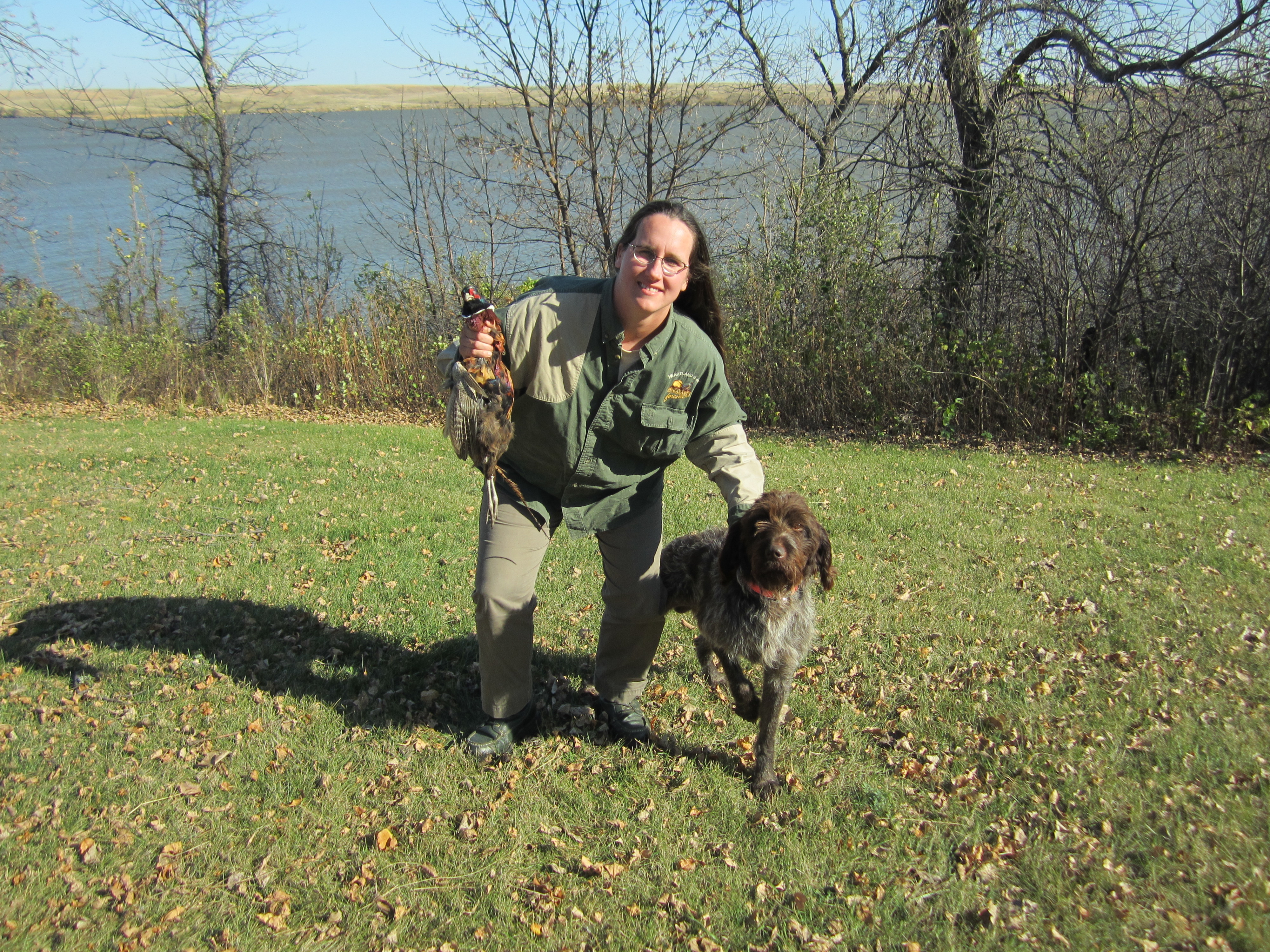
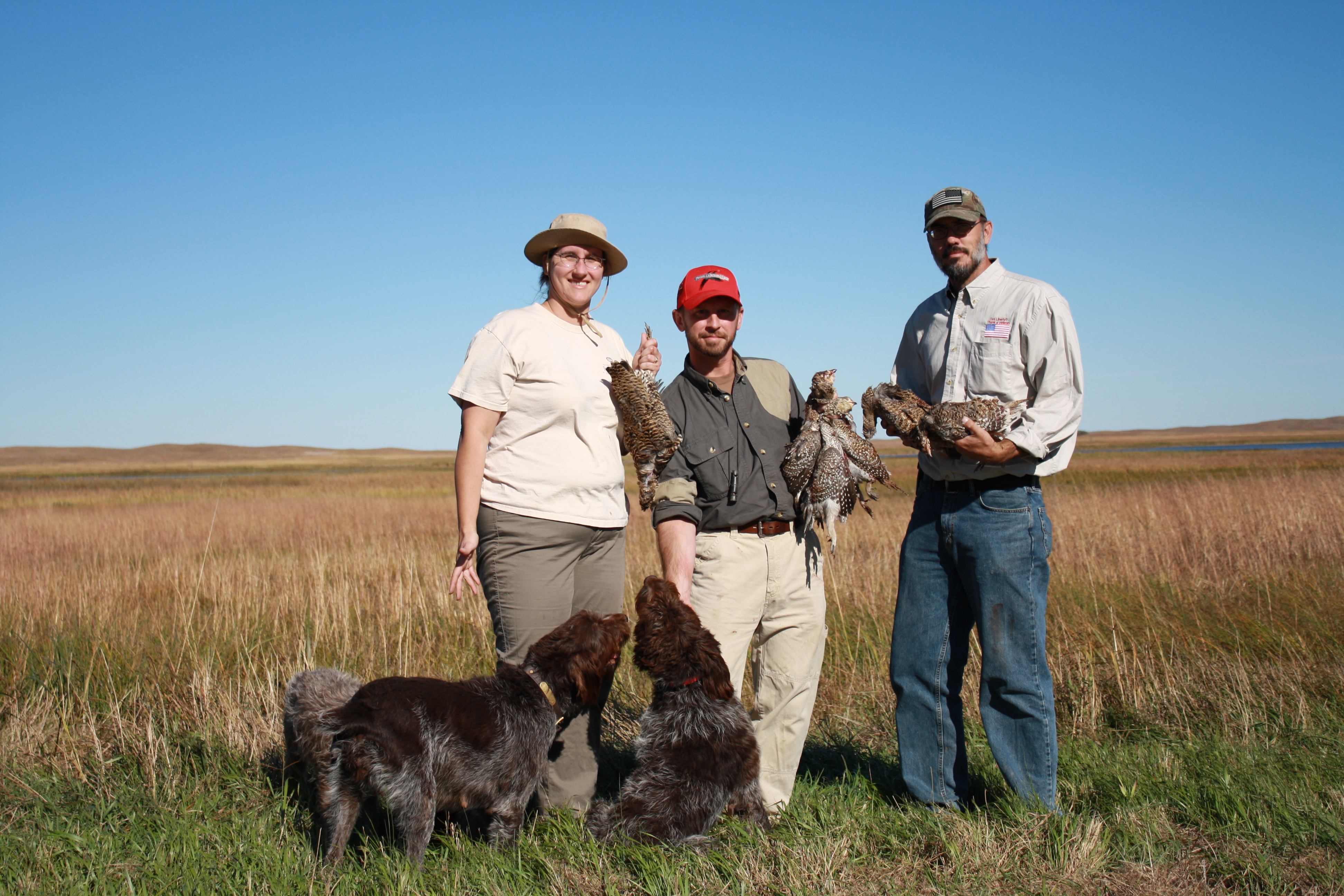
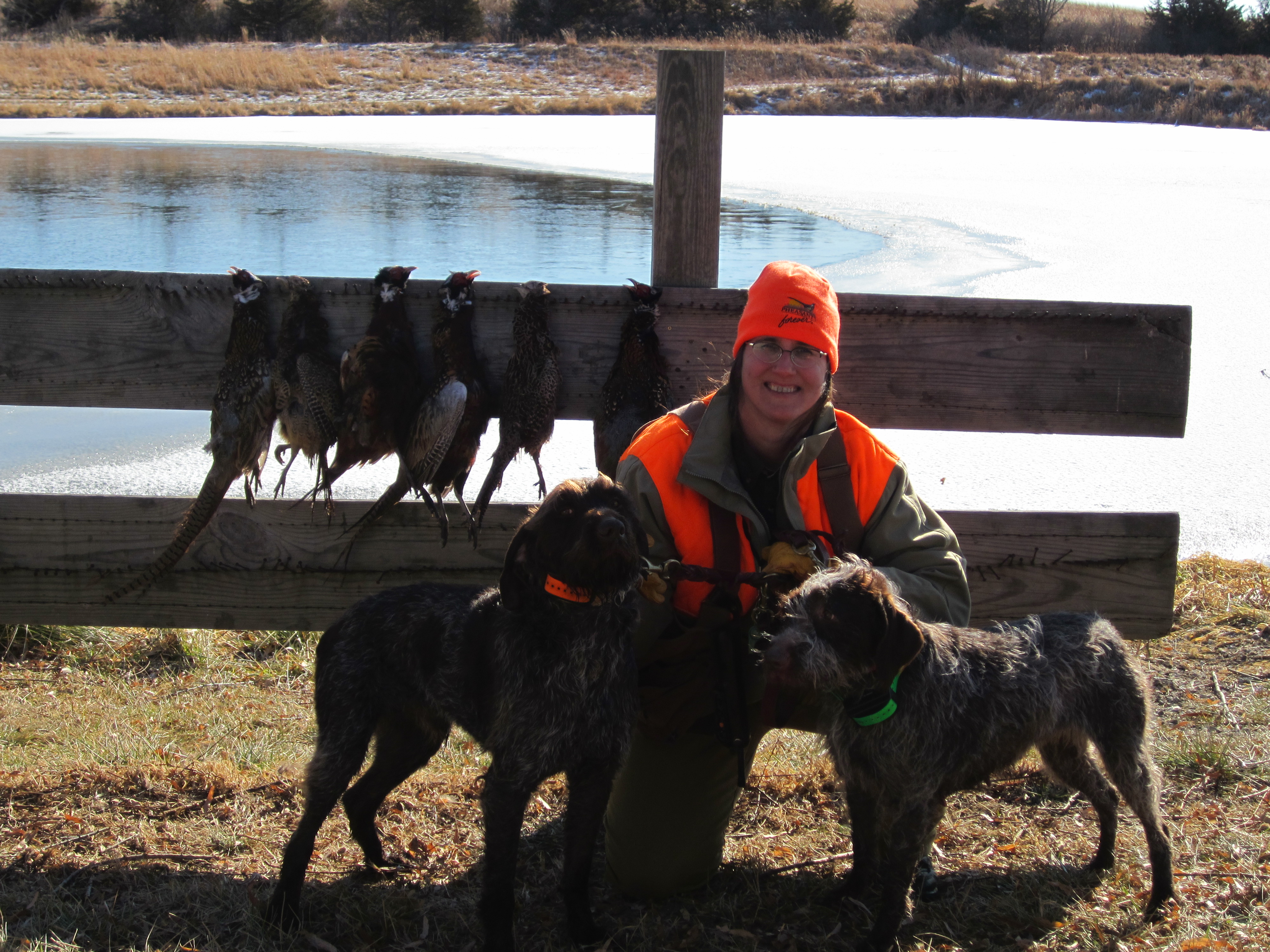
My wife Charity and our dogs Sam and Mae after guiding a hunt on Friday the 22nd

We set out on Christmas Eve with the Yule-tide hope of Sandhills pheasants.  These are a different flock of bird.  They are miles away of any cornfield.  In fact, they have never seen a plowed acre.  Nor have they ever dined on any plot of land disturbed by man.  Food plots are foreign to them.  These birds eke out a living on the edges of wetlands and fill their crops on the particulate matter of swamps, bugs and wild-sunflower seeds.  While these birds are not robust by pheasant standards, they are wild.  Very wild.  They survive in a niche no sharp-tail would tolerate and no prairie chicken would accept.  If one were to transverse the wilds of Eurasia their cousins would be waiting, but only briefly.

Our first push circumnavigated a popular duck hunting marsh in north-central Nebraska.  I’ve sat in a duck blind here, only to have a rooster stalk me and cackle “good-morning”.

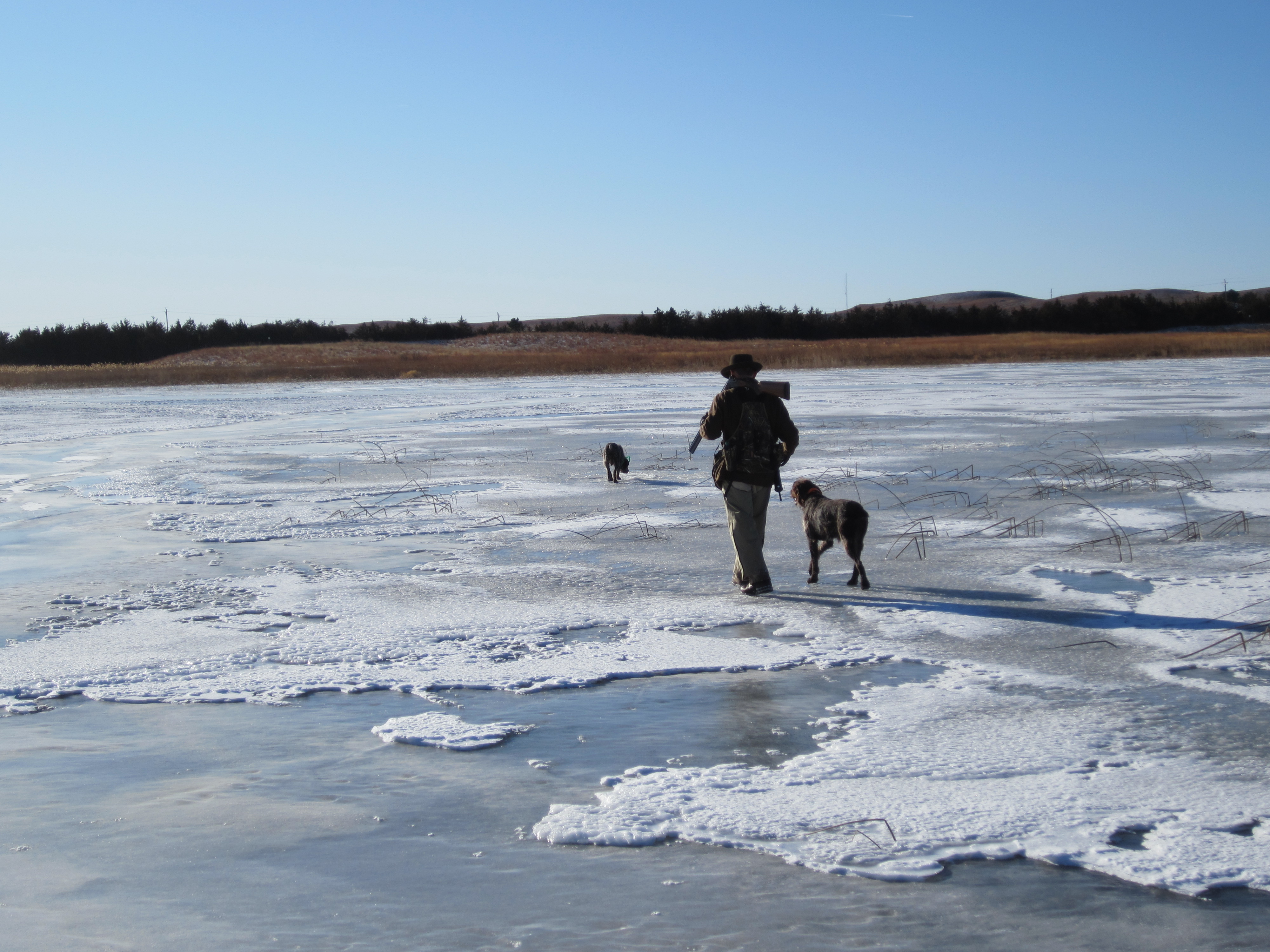
Working the frozen marsh

However, today they were sparse to the point of nonexistent.  With Sam and Mae we covered every likely haunt with no results.  Aside from some good dog work and a flush from a hen that was impressive in her strength and speed out of cattails that were thick as any mess you’ve ever seen or waded through, we got nothing but a good workout from this endeavor.

We moved on to another spot after crossing a frozen lake that, while populated by ice fishermen, was eerie.  Moaning, popping ice is not fun to cross.   But after walking 3 miles through semi-marsh, you take the most direct path to the truck if the opportunity presents itself.

Crossing the ice

Our next push was easy at first and very obvious.  A strip of willows through a frozen marsh, with hawks cruising the area, can only mean birds.  We dropped all four dogs.   They pushed to the west and as we approached the edge of the frozen lake this slough fed, birds began to break.   At first it was two hens, but then a rooster broke cover.  He cleared us, but his friend wasn’t so lucky.  Rooster #1 sailed a quarter mile away.   His partner was stopped cold by a load of steel 4’s.  After the retrieve, Charity and I swung the line by 180 degrees and followed the first legal bird of the day.  This time the wind was at our backs, so the dogs had to shift their game.  The ranged out and worked back to us through the thigh high sedges and cattails.  We pushed a half mile, but this bird was not to be shot.  He broke and sailed onto a private piece of ground.

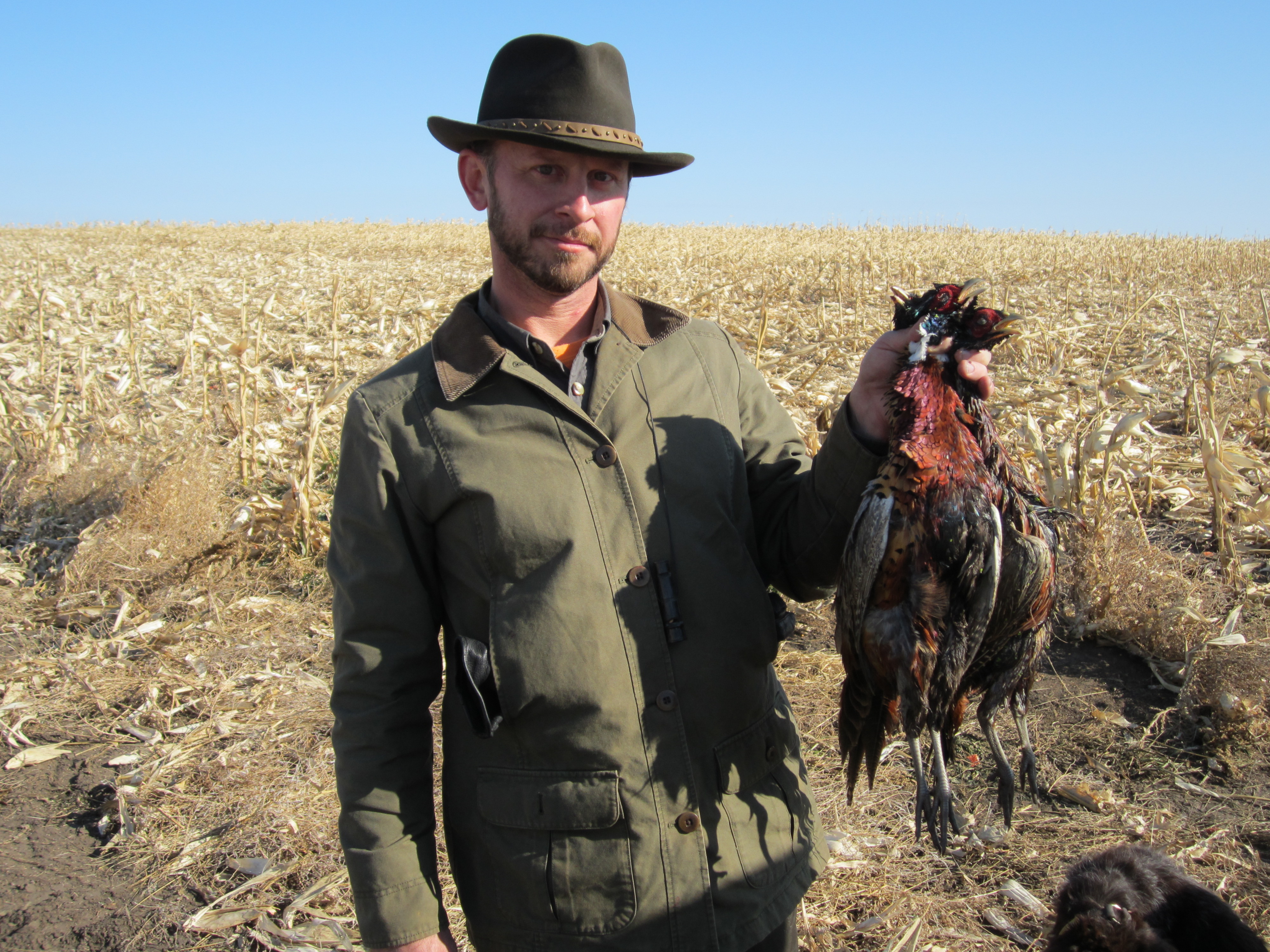
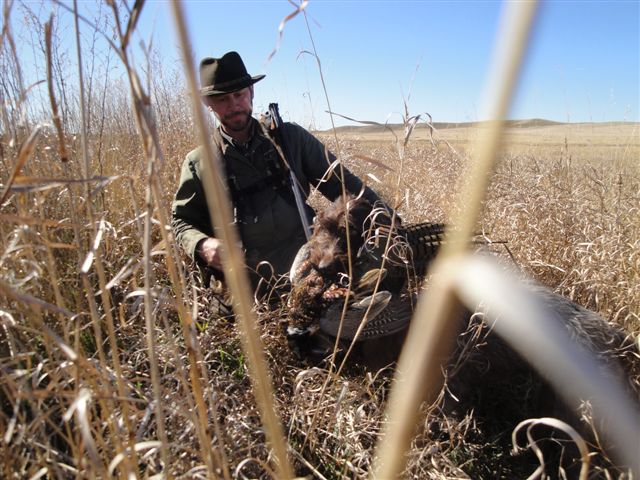
A hard-fought Sandhills pheasant

Christmas afternoon we returned to the same spot, but decided to hit the dunes for grouse.

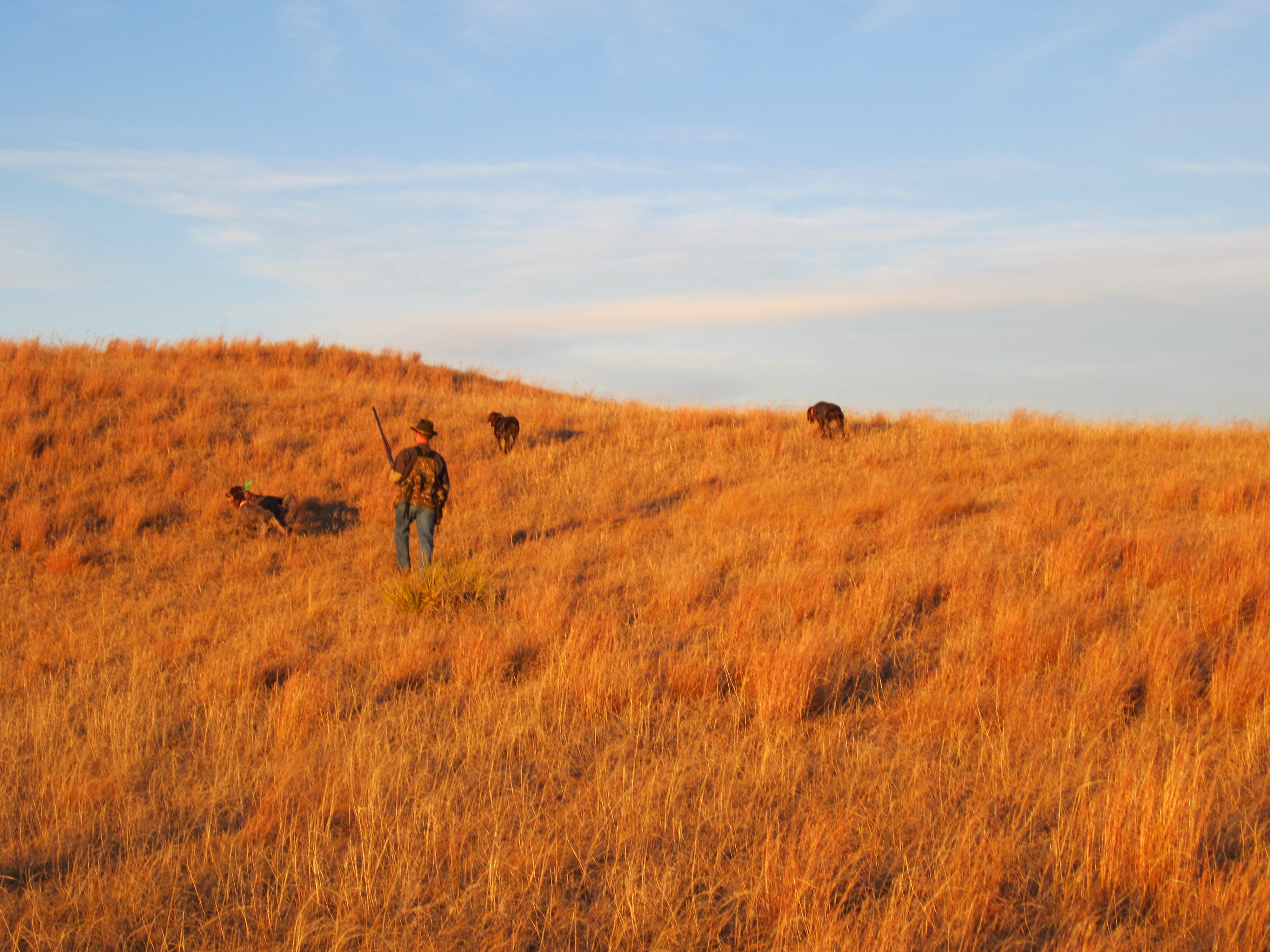
Searching the dunes for grouse

Over two hours we covered four miles, saw deer and a coyote, but no birds presented themselves.  It was a beautiful afternoon.  Clear skies and 50 degrees days in late December can’t be ignored.

Hard hunting is what it is.

Unexpected Fun

1 Comment

Southeastern Nebraska Pheasants

BB, Sam and I had a great morning!

Sometimes your best times in the field are completely unplanned.  Last Saturday was a striking example of that semi-accurate truism.

The events that led up to one of my most pleasant Nebraska bird hunting surprises were set in motion earlier in the week when a fellow abuser of boot-leather (aka a Southeastern Nebraska pheasant hunter) approached me about joining him on a piece a private ground he had access to.  Never being one to pass up access, but being of a careful nature when it comes to such unexpected good fortune, I asked a few questions.  Specifically, how many other hunters would be joining us and are there any quail in the area?  When he replied “None” and “We always see a covey or two”, I committed.

We met at my place well before sunrise the following Saturday, loaded up the dogs and made our way south into what is considered the worst pheasant country in NE.  While this is considered the worst for large colorful roosters, it is decent quail country, if you can find coveys that have not been over-shot.

As the sun rose and legal shooting time came and went, we came upon a piece of CRP-MAP ground that looked as prime as any Dakota field.  Despite having all the appearances of prime potential, fields such as this have disappointed in the past, but we decided to work this particular one anyway.

We exited the vehicle in a hushed manner.  Any rooster in these parts knows that slamming car doors, big talking and sound of dogs means trouble.  Within 5 minutes I saw Sam get birdy and start working his way to the waterway in-front of us.  Liking the look of things, we picked up the pace and moved towards the dog who was already locking up.  As we approached, a rooster flushed in my direction, crossing my line of fire at less than 30 yards.  What?!  That never happens in these parts.  One expects to walk at least 3 hours and have flushes at a minimum of 60 yards this time of year.  My partner’s discharging gun snapped me back into focus and I quickly ended this bird’s plan of escape with a round of 6’s.

The next bird was rousted in a very similar fashion as we approached the next waterway.   This time Sam worked the bird, which made the mistake of heading my way.  BB was also birdy and ended this bird’s escape plans.  Again I was surprised to see a rooster emerge from the giant ragweed and fly in my direction.  He too was dropped within 30 yards and BB moved in to make the retrieve.  Seeing this made me very happy.  Relative to her size, lugging an adult rooster was an accomplishment.

We moved on and put up a few hens off points, which is fun and good practice for the dogs.  As we made our way along the perimeter of the field, Sam became quite interested in yet another waterway and the rest of us happily followed his lead.  We were all frankly giddy with 2 birds in the bag in 30 minutes.  My partner Matt and I straddled the waterway and followed it downhill.  As we got to a point where it flattened out, both dogs became intense and went to work on a thick clump of sunflower.  Jackpot, another rooster made the mistake flying into my line of fire, albeit behind me.  My partner and I both hesitated a moment as we turned for the shot, as any shot that requires spinning around requires attention paid to one’s companions.  The rooster was now directly in-front of me and the bead of my SKB.  Seconds later he was in Sam’s mouth, making his way over to my game bag.

Matt and I stood there very surprised that we had taken 3 roosters out of a public field, in Southeastern Nebraska after 40 minutes in the field.  The dogs made it happen, but the Hunting Gods obviously smiled on us.

We went on to bust a decent covey of quail, which broke a 2 year dry spell for me.  What a morning!

Nebraska Quail
The lone quail of the day

Later that day we moved on to the private ground and saw precious little.  The long breaking rooster toyed with us, but that was it.  I guess those unexpected successes in the field truly are the best.

Late Season Update

Leave a comment

BB

Wirehaired Pointing Griffon

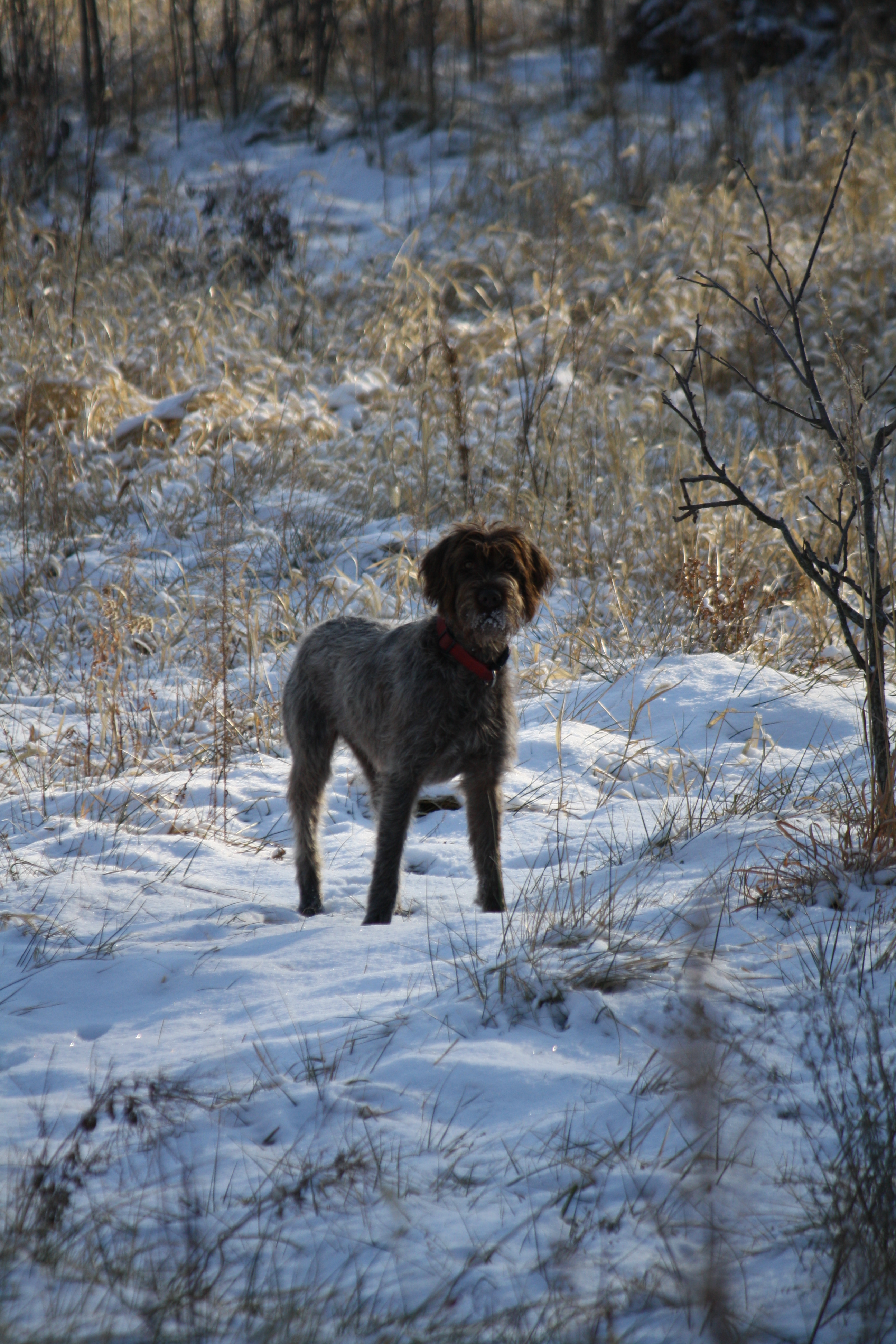
BB in the snow

Now nine months old, BB has been getting plenty of wild bird exposure this season with the pack, but last week it was time to finish her solo training.  When hunting in the pack setting, it is difficult for her to get a chance to retrieve with the older, more experienced dogs present.  We planted a couple of hen pheasants for her to practice on at the local dog training wildlife management area.

Wirehaired Pointing Griffon

Charles walks into BB’s first point of the day

Wirehaired Pointing Griffon

BB looking good on retrieve

Wirehaired Pointing Griffon

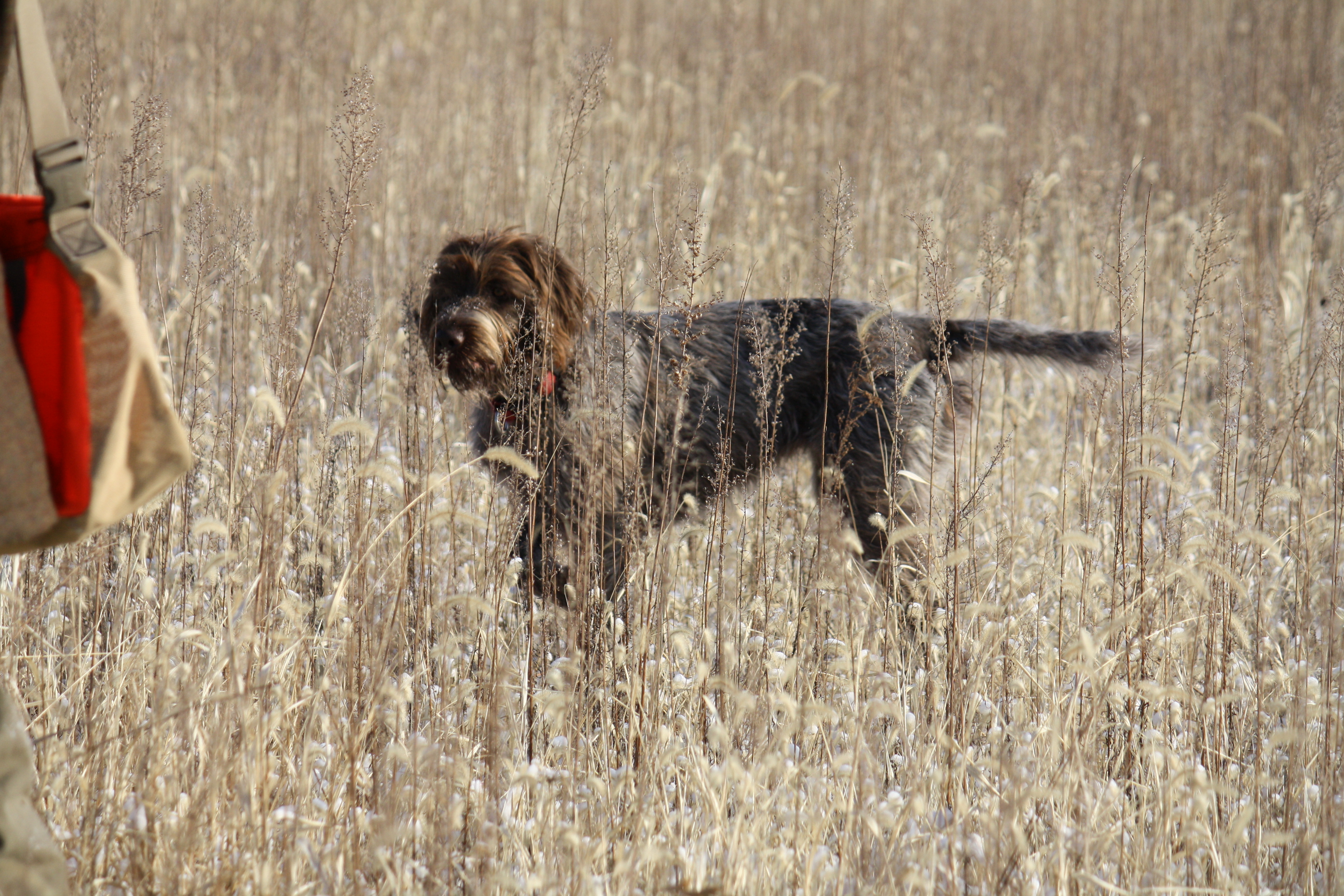
A stylish point from BB

hen pheasant

On the flush

Wirehaired Pointing Griffon

BB looking intense on retrieve

BB has done a fabulous job maturing into a hunting animal quickly.  The most important part of successfully raising a hunting Wirehaired Pointing Griffon puppy is giving them the exposure they need to tap into their natural instincts.  BB has had plenty of practice at home with basic obedience and yard work on fetching dokkens, but the majority of her hunt training has been simple exposure to situations with plenty of bird action.

Soon we will be introducing her to working as a guide dog in the hunting preserve setting, which will be an exciting addition to her experience in the field.

Sue and Sam

Our flagship working dogs have been very busy at the preserve guiding hunts.  Charles has been doing all of the guide work up with me assisting, but the volume of weekday hunts has reached a point to where I will now be taking care of the weekday guiding duties.

November 24, 2011

November 25, 2011

December 1, 2011

Morning, December 10, 2011

Afternoon, December 10, 2011

December 11, 2011

Mae

Mae (AKC/NAVHDA Little Lady Aspen) is a five year old female Wirehaired Pointing Griffon who now lives in our home and kennel.  She has definitely become a member of the pack and family!  I will provide more information on Mae’s background and training in a future post.  Welcome to Bluestem Kennels, Mae!

Mae on the move

Upcoming Events

Charles is invited to hunt some private land in Southeastern Nebraska this Saturday and currently the plan is for Sam and BB to work the fields that day.  The week before Christmas, Charity and the dogs are on call at the preserve to guide a few hunts and Christmas weekend will be a Sandhills wild bird all-pack hunt.  That takes us into the last month of wild bird hunting in Nebraska, with our season closing goals being to fill at least one (each hunter gets 3 annually) of our Eastern Nebraska Prairie Chicken tags and to bag some quail.  We’ll be guiding during preserve season until March 31st, so the game isn’t up for us just yet.

We anticipate Sue coming into her breeding season sometime in February, so a few weeks into her pregnancy she’ll be taken out of the hunting circuit and it will be time for BB to step in.  Plenty to look forward to in the coming months!

Happy Holidays and Happy Hunting from Bluestem Kennels!

The Stay-At-Home Wingshooter

Leave a comment

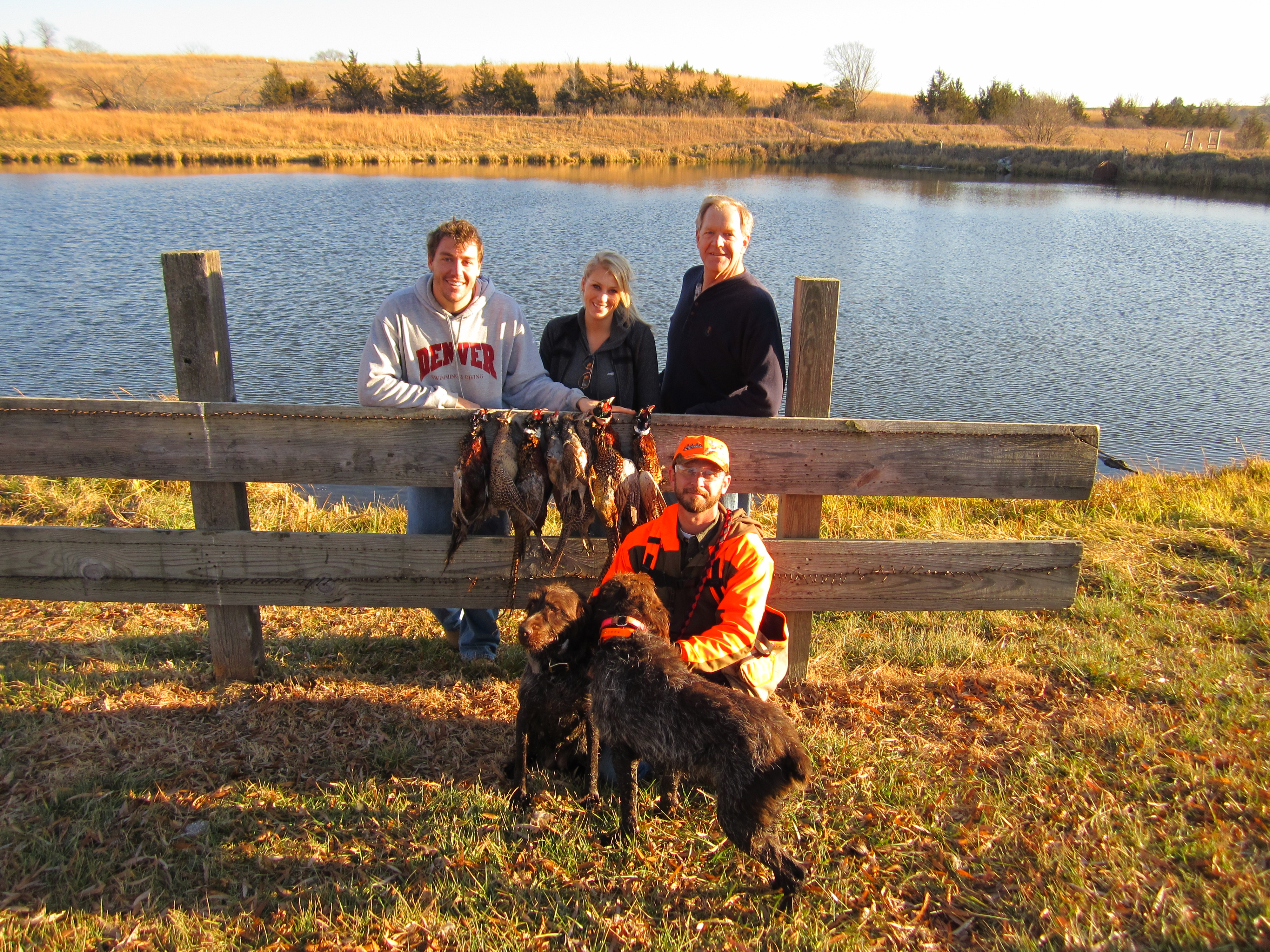
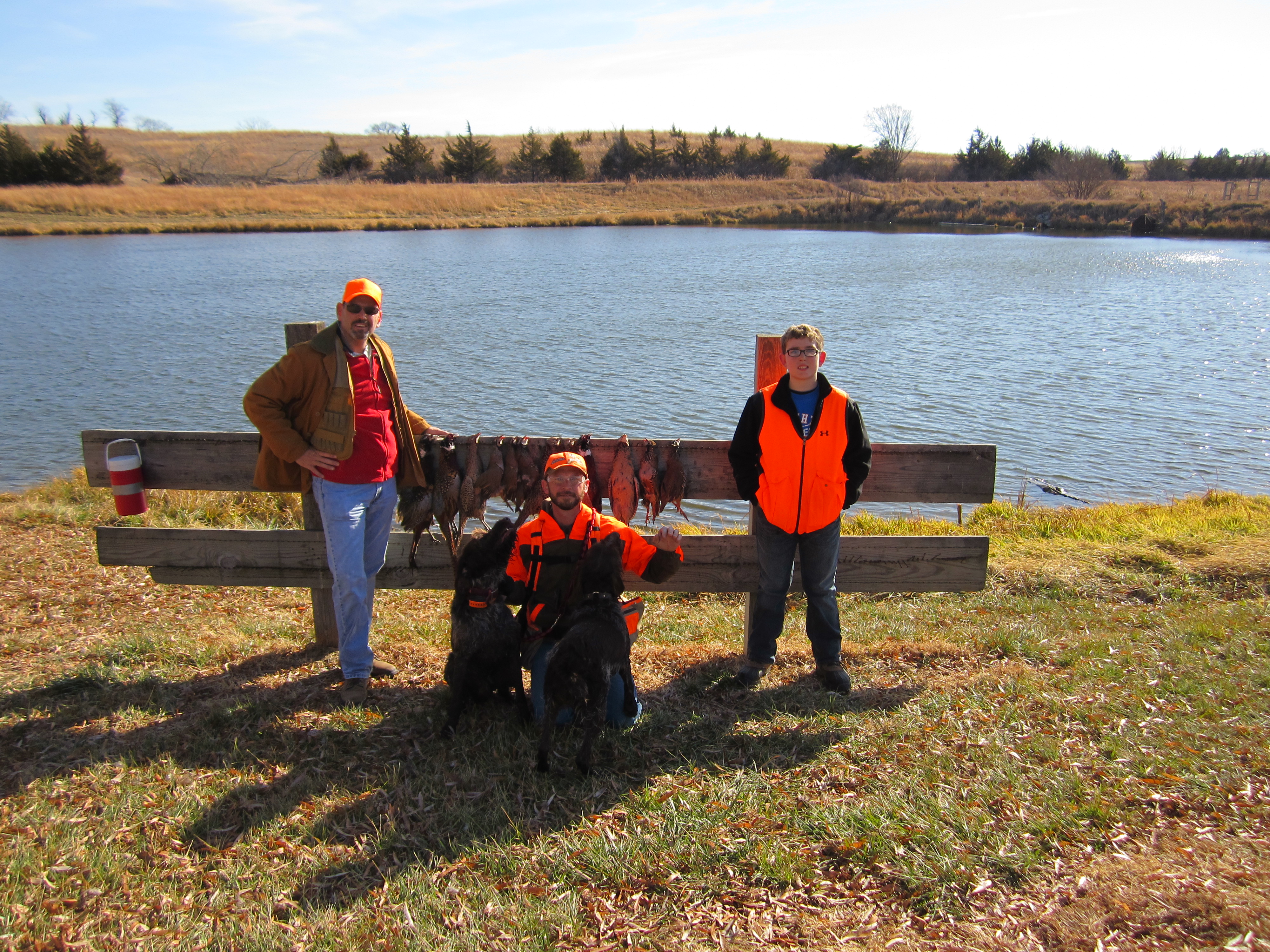
Charles and the dogs guided a father, son and daughter on Wednesday

The area outlying the Omaha metro may not be blessed with the best wild pheasant numbers, but there are some fine preserves to enjoy the fresh air, sunshine and shooting.  For the past year, Charles and the dogs have been lucky enough to guide hunts for Pheasant Haven Hunting Acres http://www.pheasanthavenlodge.com/ just to the west of Omaha’s Elkhorn neighborhood, in Elk City.

As Steve Smith so eloquently stated in his article “The Semi-Traveling Wingshooter” in the September/October 2011 issue of Pointing Dog Journal:

We owe it to the dog, after all, because he doesn’t care.  He’ll get as much satisfaction out of pointing a preserve pheasant as he will cornering a running Nebraska ringneck; the released bobwhite he nails will stir his soul like a dozen-bird Kansas covey.  That dog doesn’t look down his nose at anything.  He’s just happy to be out there obeying the commands shouted into his ear by his chromosomes.

A father and son team took to the field Thanksgiving morning

Preserve experiences cannot completely replace wild bird hunting for die-hards, but for many urban/suburbanites who want a pleasant morning or afternoon close to home with guaranteed flushes, the preserve experience is perfect.

Pheasant Bonanza http://www.pheasantbonanza.com/ is about an hour and a half north of the metro and was featured in this year’s production of Scott Linden’s Wingshooting USA television show.  The episode has yet to air, but here is the blog post covering his visit: http://scottlindenoutdoors.com/2011/10/19/pheasant-bonanza-yes-it-is/

For those poor souls living outside of the wild pheasant zone, preserve hunting may be the only reasonable chance at a rooster.  The Aberdeen (S.D.) newspaper recently published an article about how out-of-state hunter numbers are way down this year, as the cost of gas and travel is prohibitive to many in the down economy.  There is no shame in wanting quality time in the field close to home with your dogs or someone else’s.

“This is the vital role of the modern shooting preserve: to maintain a tradition of quality shooting wherever that tradition is fading under the onslaught of suburbia, and where the joy of dog and gun may otherwise be lost to tomorrow’s men.” — Winchester’s Conservation Department, Shooting Preserve Management (1967)

To locate a hunting preserve near you, visit Quail Unlimited’s comprehensive directory: http://www.qu.org/main/huntdir/huntdirectory.cfm


Pupdate: Roxy at 8 months

Leave a comment

Randy from Utah took his 8 month old female pup “Roxy” from our 2011 “B” litter up to North Dakota for some pheasant hunting with great success!  Thank you to Randy and Pam for sharing the photos!

Randy, Roxy and roosters!!

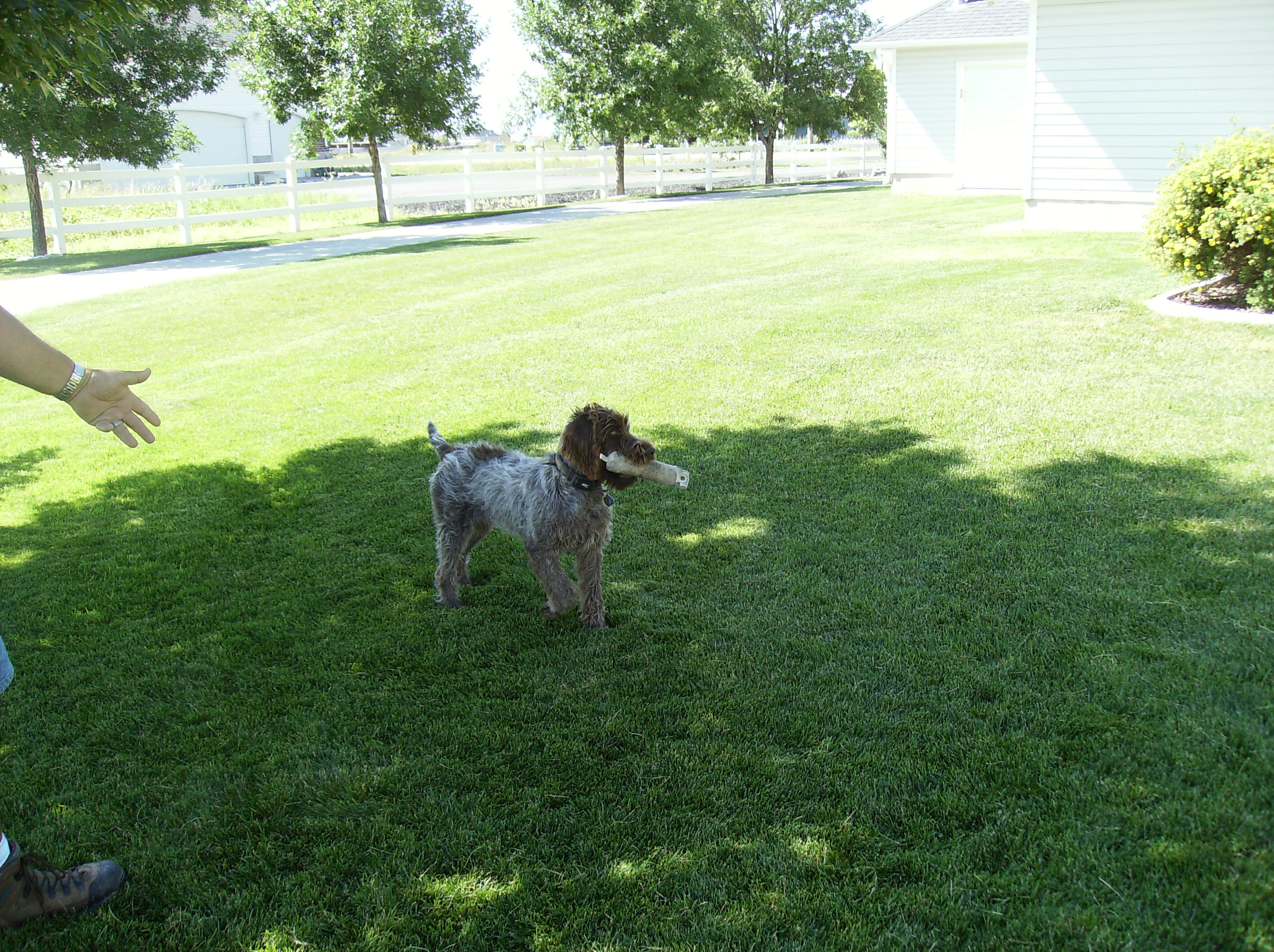
Roxy playing in the yard

Here are some recent photos of our seven and a half month old female, BB, out on opening day of Nebraska pheasant season on October 29th.

BB and Charity looking for birds. Photo courtesy of Ultimate Upland

BB on the run. Photo courtesy of Ultimate Upland

We’ve had some great hunting this year, make sure to check out our hunting blog at http://versatilehunter.com/.

A busy hunting season!

Leave a comment

We’ve been busy hunting with our griffons this season, please check our new hunting blog at http://versatilehunter.com/ for updates.  You can also follow Versatile Hunter on Facebook and Twitter @VersatileHunter.

Why the change?  Versatile Hunter takes the focus of the writing away from the dogs and on to the hunting, hoping to capture a new audience for our adventures.  I’ll be sure to update Bluestem Kennels in the future with a summary focusing on the dogs’ performance hunting this year with some of the outtake photos that didn’t make it on to versatilehunter.com.

Bluestem Kennels will be the primary focus of my writing once we get into puppy season, so please stay tuned!

Nebraska Pheasant Opening Weekend 2011

Leave a comment

Opening Day, Saturday, October 29th

We were a little surprised to see a fellow pheasant hunter with a truck bed full of dog boxes joining us at the Bellevue Quik Trip to collect the morning coffee, as the forecast was foreboding for opening day.  Hunting tradition in Nebraska doesn’t yield to any man’s dissent and even in the Omaha suburbs folks were up early to head out into the yonder fields.

Prior to our southbound journey, we first had to pick up our old friend, Marvin Brinkman.  The annual opening hunt is always hosted by Marvin and his parents, Wilmer and Maude, on the family farm near Sterling, Nebraska.  Due to the high price of corn and soybeans this year, the Brinkmans hold some of the last CRP in Johnson County.  The Conservation Reserve Program provides the farmers a pittance in exchange for maintaining prairie in comparison to the going rate for corn and soybeans.  Luckily, the elder Brinkmans are past tractor-driving age and are also conservation-minded people.  In years past, large parties of pheasant hunters have traversed their fields with high hopes of bagging limits, and several were successful back in the 1990’s, but this year we simply hold the hope of seeing birds.

On our southbound journey in the dark, we entertained ourselves with tales from Charles and Marvin’s deer harvesting era, when they would obtain every tag they could and bag numerous deer a year.  Our garage was a game cleaning station and the chest freezer frequently overflowed with venison.  Yet I digress and should save the stories of yesteryear for summertime when there is no hunting to report.

Brian Koch of Ultimate Upland http://www.ultimateupland.com/ met us in Syracuse to experience and photograph the hunt.  Brian has been on the road since September, camping and hunting in North Dakota, Montana, South Dakota and now Nebraska.

We arrived to our first field prior to shooting hours, so we visited in the truck for awhile, then geared up with the hopes of pheasant or quail.  The 40 or so acres of native prairie were surrounded by standing corn to the north, east and west, with a small waterway on the south bordered by trees and shrubs.  Our path began on the southwest corner of the property, pushing east.  The guys took to the field, while I weaved in and out of the thicket next to the waterway.  About 15 minutes into our push, I heard slight and distant wingbeats, with the flush of three small bobwhite quail catching my eye from the field.  Marvin and Charles elected not to shoot, hoping to allow the covey to grow in the future.  Our hike continued and my 7-year old female griffon, Sue, joined me in the brush, acting birdy.  Charles was hitting the whistle since he couldn’t see us, but Sue locked on a solid point, nose to the ground, not moving an inch, as if to say, “it’s right there, mom!!”  Sure enough, I kicked my foot right in front of her nose and a single tiny quail alighted and weaved its agile flight back into the branches, evading my shots.

It doesn’t take very long for three primed up hunting dogs and four people to cover the field and cross the road to hit the 15 acres on the other side.  Even though no further bird activity was detected, it was a beautiful morning now that the sun was fully awake and I couldn’t help but singing the state song in my head as I watched the golden leaves drift to the ground in the breeze and the seedheads of the big bluestem sparkle like delicate Swarovski crystal ornaments in the morning light (my favorite version of the Nebraska state song: http://www.youtube.com/watch?v=g6ADhHMLgZk)

Charity, Charles and Marvin strategize the next move. Photo courtesy of Ultimate Upland

Next stop was the “sure thing”, 80-100 acres of prime habitat, dissected by a waterway and surrounded by standing corn.  We pushed the first three quarters of the field, seeing nothing and becoming nervous that even the “sure thing” was going to be a bust.  We ambled back towards the truck, southbound down a mowed swath bordered by trees to the west and some rocky, forb-covered dirt mounds to the east, walking together and chatting excessively as if we had given up.  The dogs never quit hunting and they all locked up on a thick spot, which the hunters ran to surround.  A rooster flushed with both Charles and I taking shots.

BB looks on as Charles and Charity take shots. Photo courtesy of Ultimate Upland

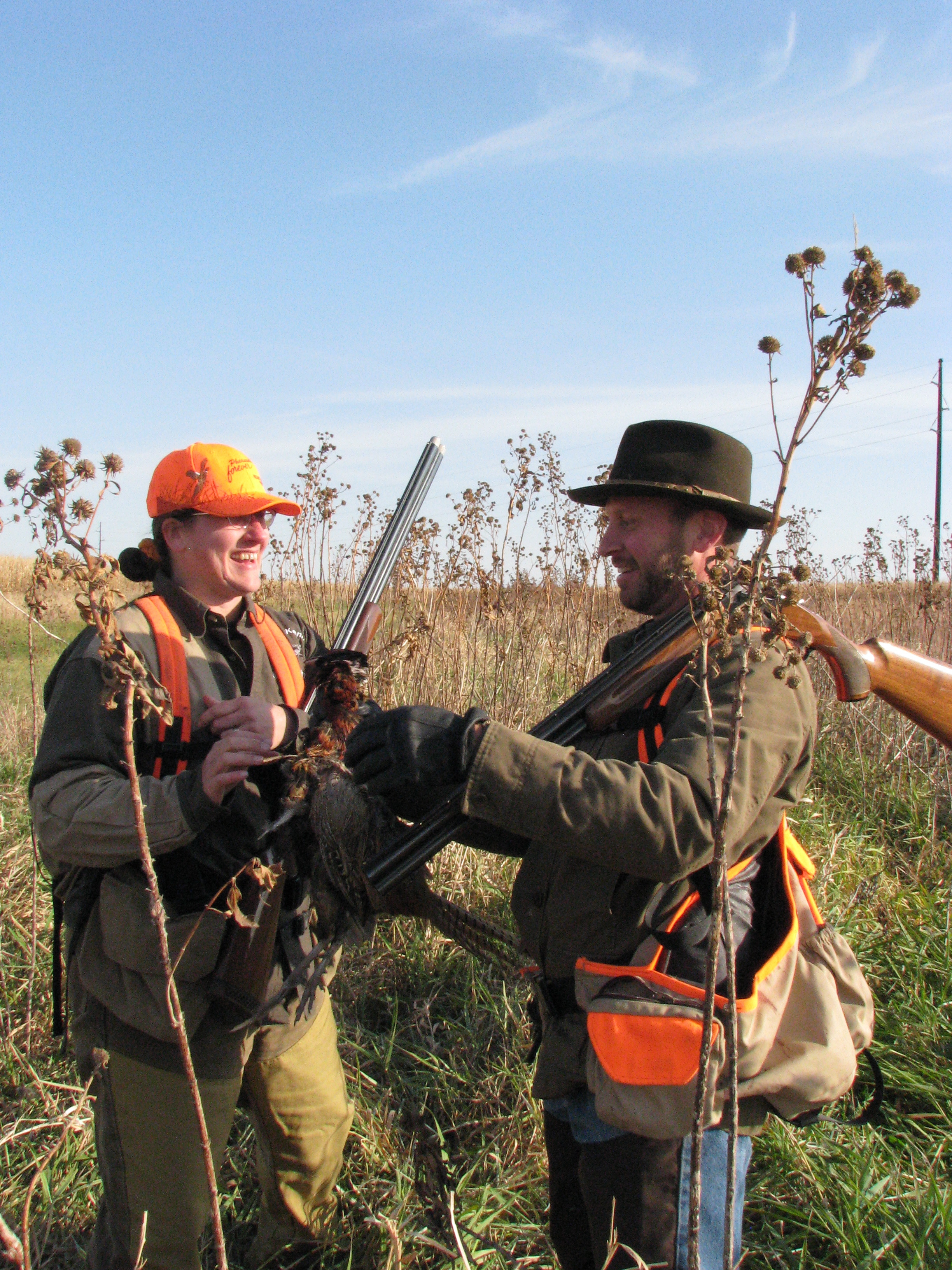
Convinced that I had shot the bird, Sam brought me the retrieve and the debate ensued as to who shot the bird.  Following the official review, I was granted the bird.

Charity and Charles take time for the official review. Photo courtesy of Ultimate Upland

The hunt took a serious tone now that the game was on, especially where Charles felt that his bird was stolen from him.  We followed the curvature of the treeline towards the gravel road, when Sue got birdy in the thick and a rooster spooked by surprised.  Brian had noticed that we might be getting into a shot, so he turned on the BlastCam and captured the moment of Charles taking down our second rooster of the day: https://www.facebook.com/photo.php?v=2458542390300

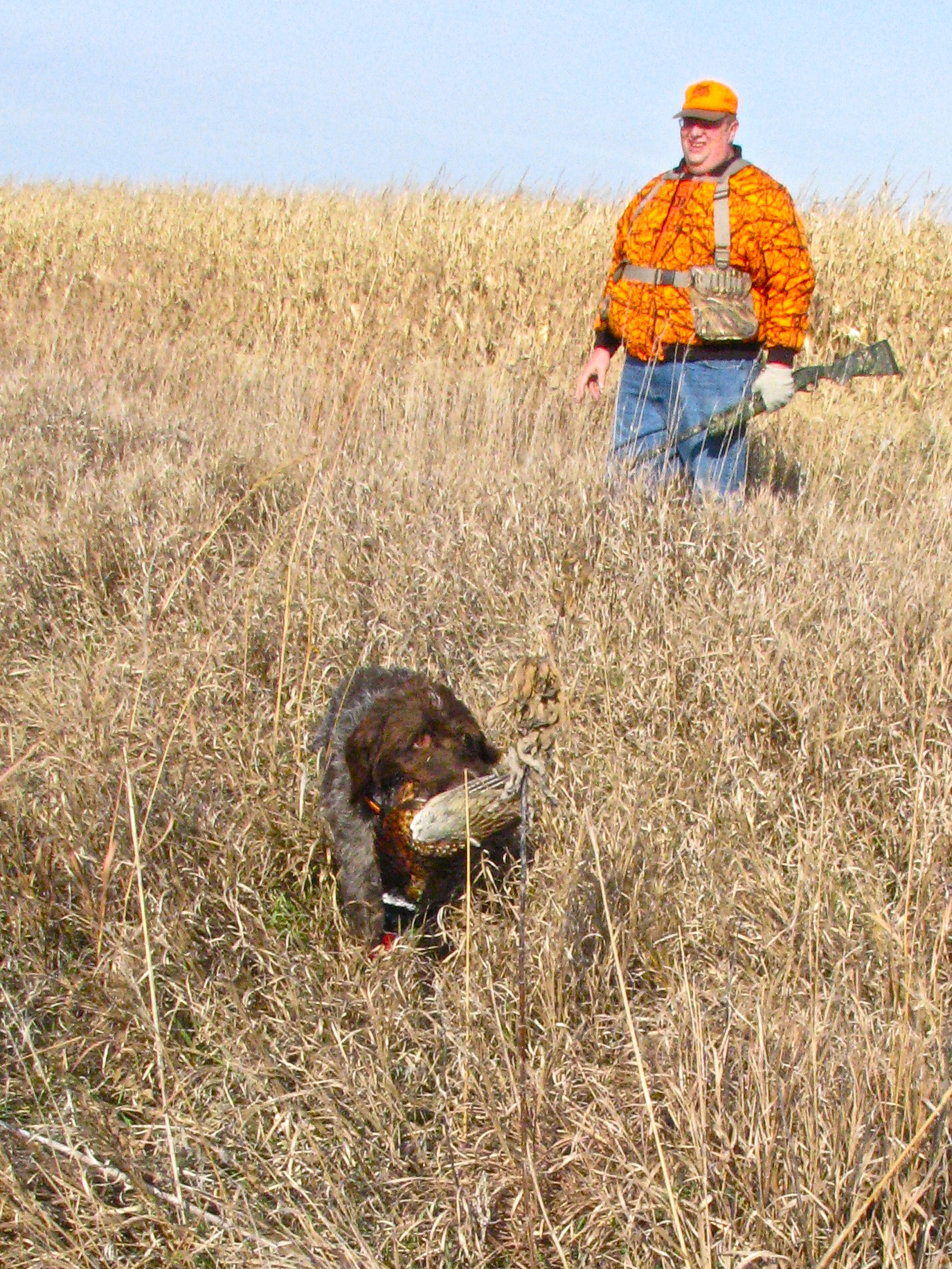
Sam brings in the retrieve as Marvin looks on. Photo courtesy of Ultimate Upland

After this bird was collected, we swept the corner of the field and decided to post Marvin up on the edge of the road at the end of the waterway, a spot where the guys had always put up birds.  Charles, the dogs and I pushed the waterway into the thick of trees and weeds right by the road, but nothing popped out.  It was getting up on lunch time, so we drove towards Sterling and quickly hit a waterway on some land that the Brinkmans rent out for farming, but nothing was to be found.

Scott’s Place, the watering hole of Sterling, was filled with the town’s usual suspects to view the Husker football game against Michigan State.  Everyone was abuzz with Big Red on the board, greeting Marvin as one of their own and wanting to know how our hunt was going, “We’re on the board, too!” I exclaimed.  We settled in for some iced tea and the special of the day, ending up taking a three hour lunch talking dream bird hunts, pheasant management practices in Nebraska and enjoying the raucousness of the football game.

Our final destination of the day was the “home place”, 120 acres of CRP in the middle of cornfields, with a fish pond in the middle.  We had almost completed an hour long push of the property when the dogs got really birdy on our return trip to the truck.  We had a rooster running, straight towards the corn, where despite our juking and jiving, he got away.  The dogs put up a hen in the corn and we assumed that it was the bird we had been chasing.  No longer than 15 feet from the truck, guns broken open, the dogs bust the rooster out of the standing corn to our chagrin, with nobody prepared to shoot.

It was time to pay our hosts, Wilmer and Maude, a visit and present them with a gift of authentic German ring bologna that we purchased for them in North Dakota.  One must always go bearing gifts when given the special opportunity to hunt private land with permission.

Nobody came into this trip expecting a limit.  The excitement of the hunt was seeing that there are still wild birds in southeastern Nebraska.

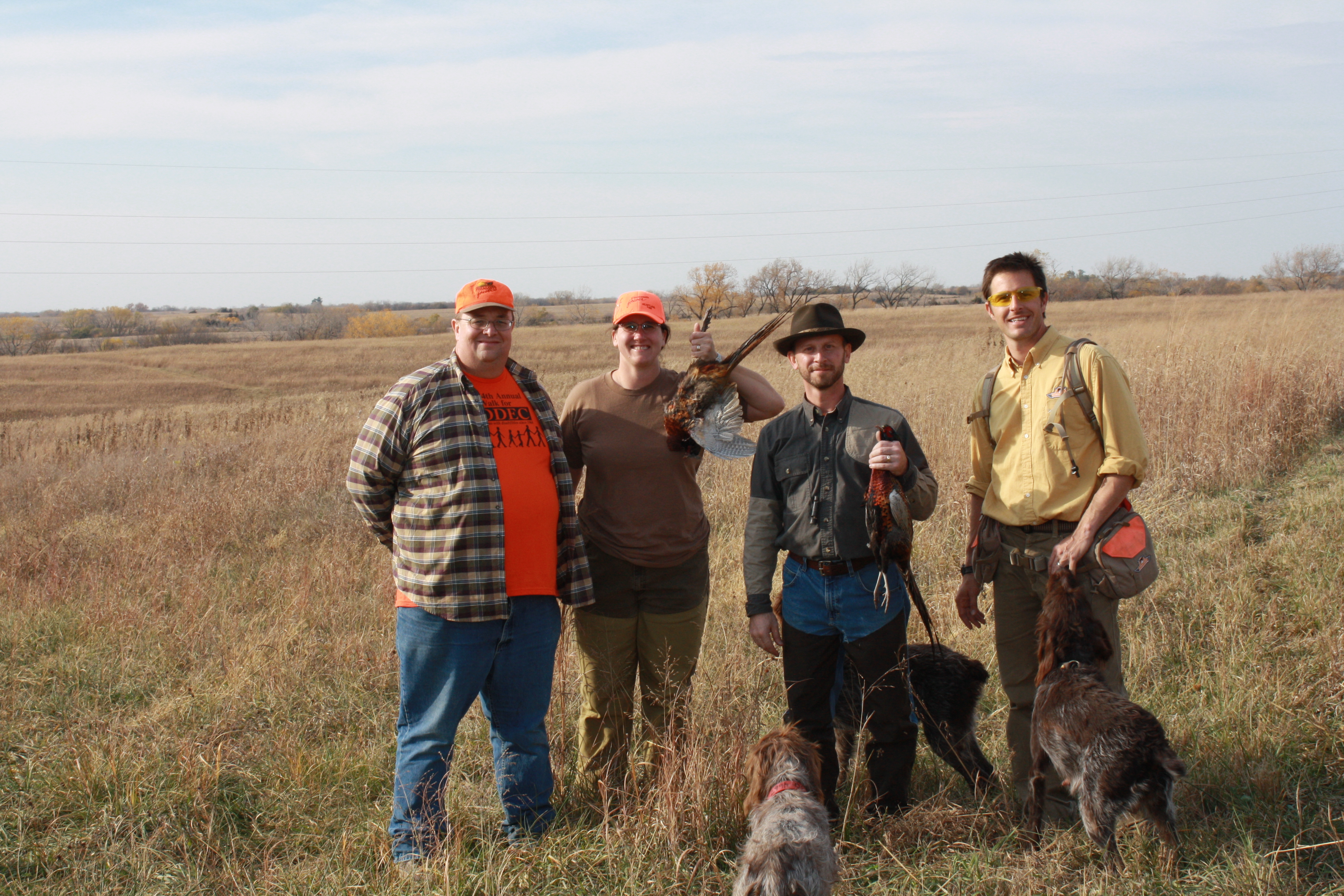
Landowner Marvin Brinkman, Charity, Charles and Brian Koch of Ultimate Upland

Sunday, October 30th

We awoke Sunday morning, grabbed the morning Omaha World-Herald from the yard, and drank our coffee with no intention of a hunt entering our minds.  That was until we turned to the Sports section and read David Hendee’s account of opening weekend.  He had traveled out to Broken Bow’s Pressey Wildlife Management Area, which was stocked with pheasants by the Nebraska Game and Parks Commission for the previous weekend’s youth hunt.  The article took the tone that NGPC and Pheasants Forever were disappointed with the hunter turnout at the stocked WMA’s.

Game on.  Charles quickly got his hunting clothes on, while I dressed our 7-year old son to follow Charles on a hunt at Twin Oaks Wildlife Management Area southeast of Tecumsah, which was also stocked for the youth hunt.  My little guy would never have made it through a full day, wild bird pheasant hunt in Nebraska.  The stocking of the wildlife management areas allowed Charles to go out and bag a couple of birds in a couple of hours; he hit the field at noon and was coming home by 2 PM.  “There were more birds to be had,” he said, “and the dogs would have found them, but I wanted to keep it fun for Conrad.  Making it not fun would have defeated the purpose.”

Conrad is fired up about pheasant hunting!

Attention Nebraska pheasant hunters: there are still scratch birds to be had from the stockings for the youth hunt weekend.  Please patronize Twin Oaks WMA southeast of Tecumsah, Branched Oak WMA northwest of Lincoln, Pressey WMA southwest of Broken Bow, Sherman WMA northeast of Loup City and Oak Valley WMA southwest of Norfolk on your hunts this weekend.  Thank the Nebraska Game and Parks Commission and Pheasants Forever upon your success in order to continue this opportunity for hunters in our state!

Tales of the Rooster: North Dakota 2011

5 Comments

Saturday, October 15th

We arrived at our cabin in North Dakota around 2 PM on Saturday and artist Carl Melichar of Countryside Art Gallery in Mayer, Minnesota was there to greet us.  Carl has taken an interest in painting all of the hunting dog breeds possible and he has yet to paint a Wirehaired Pointing Griffon.  After settling into camp, we all loaded up into the truck to head for the field.  We started off in a light drizzle into a swampy creek area that was full of hens, but not a rooster to be found, so we switched into a hilly area.

Charles and the dogs working a hill

About half way through the set of hills, our male Sam gave us the body language that there was a pheasant nearby, on a run up and over the hill.  As we crested the hill, we closed in on a clump of bushes.  With three dogs and three people, the rooster had no choice but to fly.  Charles put a few pellets in it and the rooster flew back to the other side the hill.  We once again closed in on him, he flew and I hit him hard at about 10 yards.  Although I’ve been hunting grouse and ducks for over a decade, this was my first rooster.

Charity and her first rooster

Sunday, October 16th

A good roost field was scouted with brome grass cover, bordered by sunflowers and corn.  Out we went right at sunrise, along with Carl and his video camera.  I stuck to the edge of the field along the farmer access path, while Charles waded through the prime roosting area.  The dogs were very birdy and gave Charles some great points that he was able to get close enough before the rooster felt the pressure to fly.  He had a couple in the bag within 15 minutes, with retrieves courtesy of Sam (he’s a bit of a hog, but the other dogs got some in later in the trip).  We moved up out of the flat and on to the top of a set of hills, where we got into some hens and another rooster getting into Charles’s sights.  I was busy reaching for my camera when another couple roosters got up that I missed.  We continued working the set of hills for another hour, seeing plenty of hens, but it was time to get Carl back on the road to Minnesota.  We were within 50 yards of the truck when our six-month old BB locked up on point.  I was too busy watching the big dogs and walked right by without noticing.  Charles walked into her solid point and he screamed, “Rooster!!”.  I once again biffed the shot, but it was awesome to see that six-month old BB was totally in the game and not afraid to point a bird on her own.

Charles helping Carl get some shots of Sam
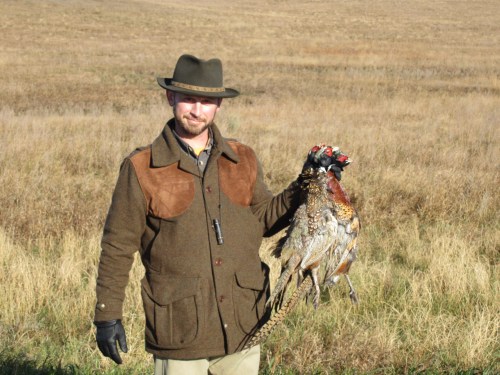
Charles and his Sunday pheasant limit

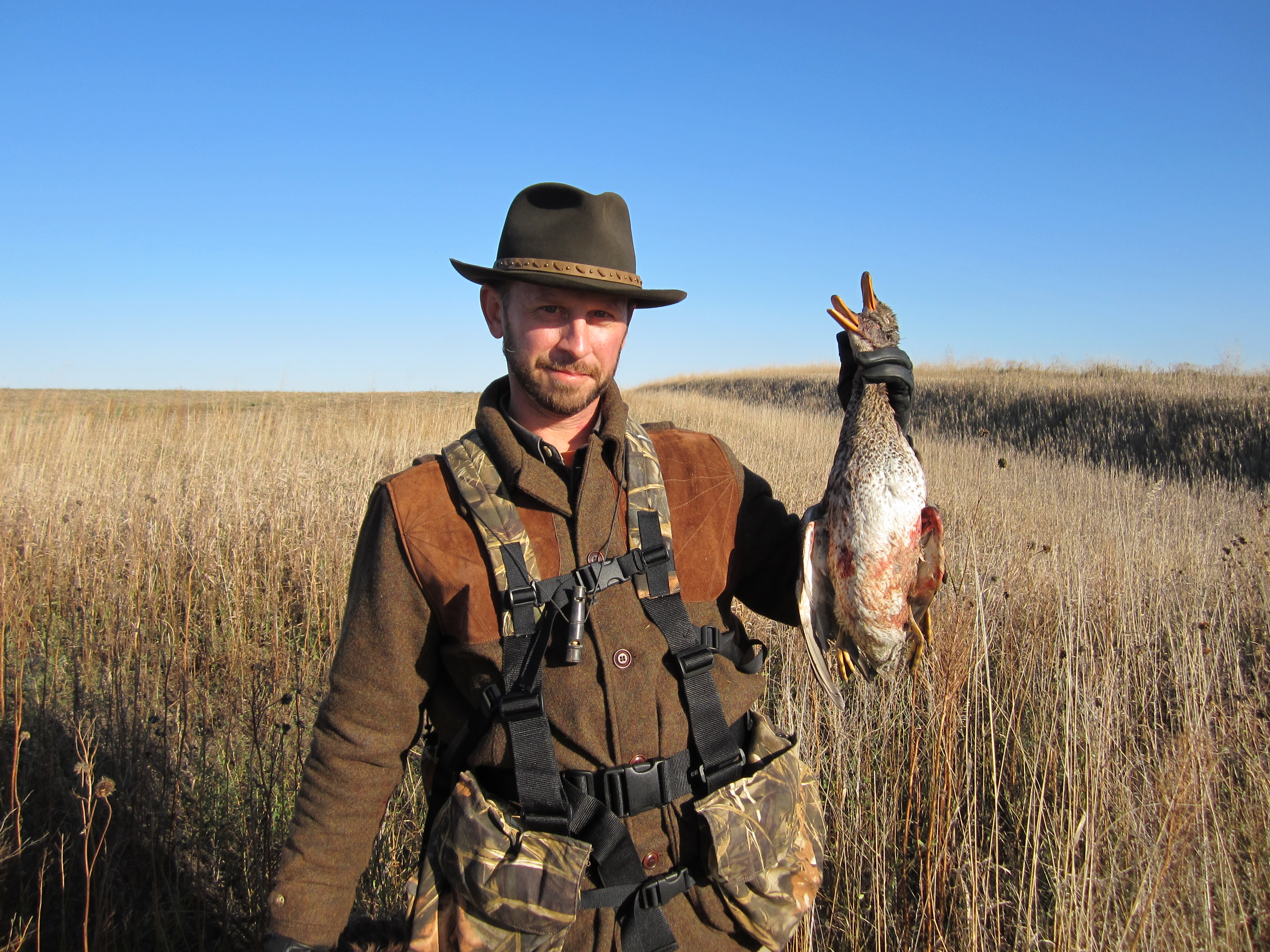
We got Carl back to the cabin and on the road home to Minnesota, then set out on a few hours of scouting.  There was a recently harvested cornfield, with a small pasture to the side and a few tiny ponds in the middle of it, so Charles thought these would be great places to get me on to a few more roosters.  As we were walking towards the ponds, we bumped one out of the edge of the pasture that was a little out of my range.  The first two ponds held nothing except a fast snipe which there was no chance for a shot at.  We skirted what we thought was just a swampy area, but boy were we surprised when the whole bird game changed.  It was actually a large pond complex filled with hundreds of gadwall ducks that we inadvertently jumped (or bumped!).  We called the dogs in to sit by us with the hope that some of the ducks would circle back around.  Sure enough, we got our chances and Charles bagged two, with me double-barreling one.  Sam and Sue worked up the retrieves while the remaining ducks in flight landed farther down the pond complex which was inaccessible on foot from where we were.  We considered loading up in the truck and heading to where we could get access, but Sue was acting like she wasn’t feeling well (we’d caught her with a dead snake in her mouth earlier, so it was hard to tell what she’d eaten), so decided to call it a day.

Charity's Sunday afternoon gadwall duck

Charles's gadwall duck double for Sunday afternoon

Monday, October 17th

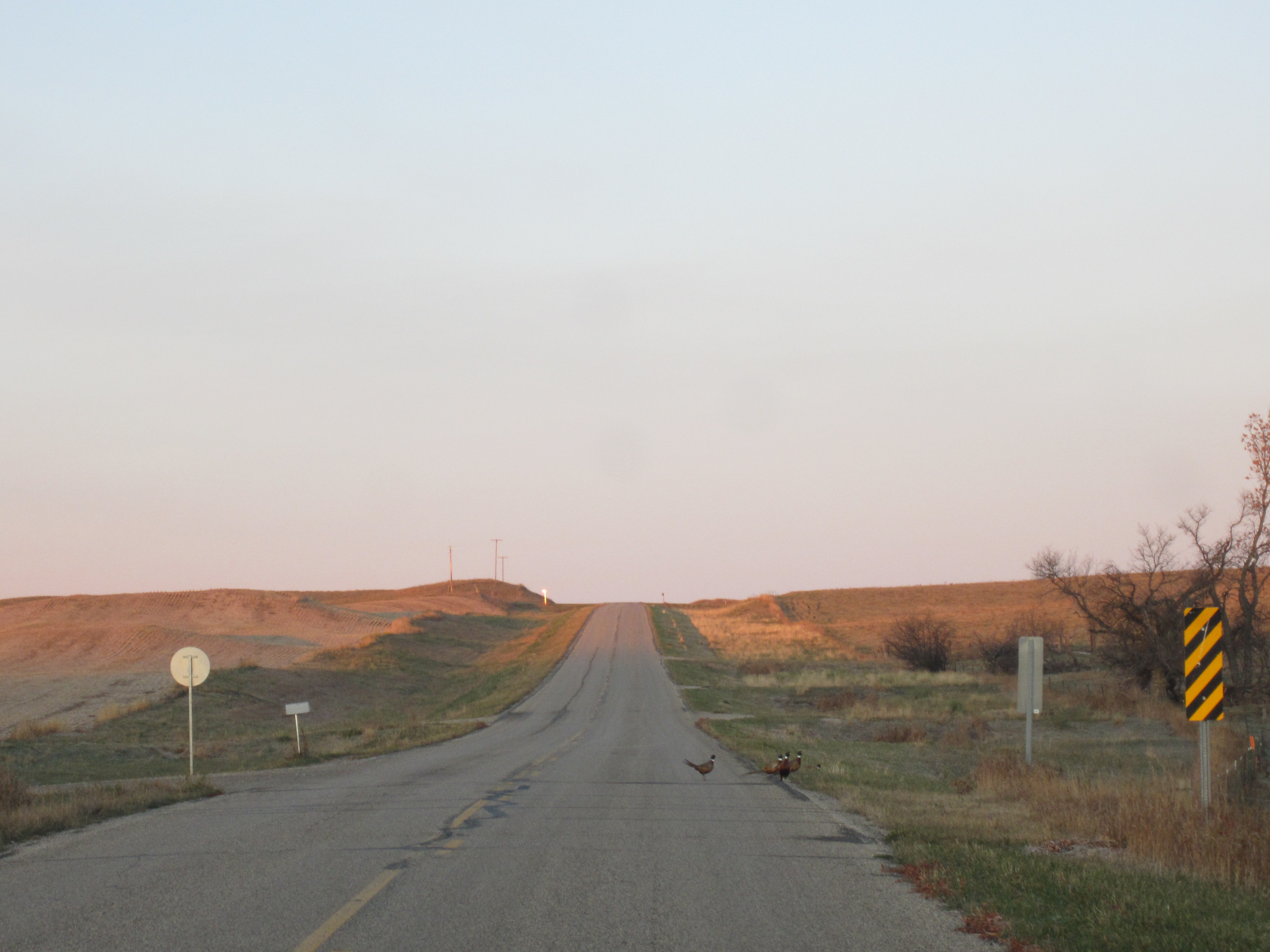
The roosters had their alarms set early Monday morning following the non-resident opener and were already leaving the roost when we hit the road.

"Run for your lives!"

With the road roosters as a sign, we should have called off our AM roost jump, but went for it anyway.  We worked the flat and hills for a good hour and a half, seeing nothing.  It was a great field that should have held something in the morning, but we had seen a truck there in the evening and those hunters must have busted it up as the birds were trying to roost, so the birds went elsewhere.

Charles settled on a large set of windbreaks with cut wheat in between the trees and surrounded by cornfields for our afternoon of hunting the loafing grounds.  He decided to run Sam solo, as the treeline was a thick, tight area and too much dog power could work against us.  It was a slow process, one of us on the west side of the treeline and the other on the east, with the dog working the east side, as the breeze was out of the west.  I didn’t have a good shot at the first rooster that flushed on my side, as he went up and over the trees.  We switched sides for the second treeline and I saw a rooster flush out of the cut wheat and back into our treeline.  Sam first pointed the bird in the trees, then I squeezed into the brush to make a racket and push him out to Charles.  Crunching. Wingbeats.  Thwack!  45 minutes into our march, Charles had the first rooster of the day.  We worked another couple of treelines, seeing nothing.  I was in my heavy winter gear, as the morning had started cold, but it was noon now and the temperature had gone up probably 30 degrees.  “This gear feels like it weighs about 500 pounds,” I told Charles.

“Just one more treeline to go,” he said.

But when we reached the north end of this treeline, he noticed a little creek and some bushy clumps that looked promising.  The dog pointed into the first bush clump and up went the roosters.  I hit one but not hard enough, so he hit the ground and took off on a run toward the cornfield 75 yards away.  Luckily, Sam isn’t afraid to grab a live one, and he chased him down and retrieved him live for me.  Sam then set out for the one that Charles hit.  The weight of the gear on my shoulders had become too much, they were pretty stoved up and I couldn’t reach around my back to stuff the rooster in my game bag.  “This gear is killing me!” I screamed.

Charles was not happy with my volume, as he knew there were other roosters nearby sitting tight and there were plenty that flushed and relocated.  So we stopped, much to his chagrin, reduced my gear load and continued.  We didn’t take 10 steps when another rooster jumped out of the same set of bushes that Charles nailed, rounding out his limit.

We walked down the hill away from the bushes into an oxbowed creek.  I decided to cut across the oxbow instead of following Sam like I should have, letting a rooster bust for the cornfield out of range.  We headed up into another bush clump, where I walked into a perfect point from Sam.

This is where I have to pause the story and rant about my gun.  I really shouldn’t, it is a beautiful Browning Citori Lightning over/under 12-gauge that we won at this year’s Pheasants Forever Heartland Chapter #491 banquet (the stock is too long for Charles, so it’s mine now and he shoots the SKB).  The one feature that I am struggling to adjust to is that the O/U switch is a left/right push to the same button as the safety.  Well, if I bump the O/U switch and it isn’t fully locked into one position or the other, the safety won’t release.

So, I pull on this rooster that is in easy range and I fumble because my safety won’t release.  I completely lost my cool and believe I ruined my pheasant mojo for the rest of the trip because of it.  We worked the last treeline, but I was so out of the game that I missed another 2 or 3 roosters.  I didn’t even feel like taking pictures (a sign of when I’m really not with it) until after we went to town for lunch and I cooled down at camp.

Sam and Charles back at camp with his Monday rooster limit
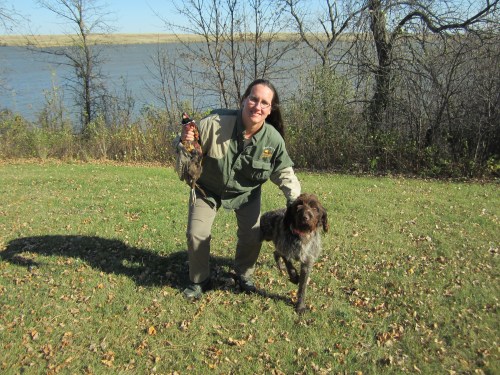
Charity and Sam with her last rooster of the trip

We had considered hanging around the cabin the rest of the afternoon, but after all of my frustration, I didn’t want to allow myself to get into a funk.  We decided to return to the duck pond that we had discovered the previous day, this time from the opposite side.  At first we tried to be sneaky about it and creep as close as we could to the pond, but the land next to the pond was complete swamp and not conducive to standing around or sneaking.  We opted for the bum rush to see if we could get some to circle back around.  Once again, hundreds of ducks busted up and I blammoed until my vest was empty, but didn’t hit anything.  Charles managed to hit a female canvasback duck, a first for us.

Charles and his canvasback duck with Sam, Sue and BB
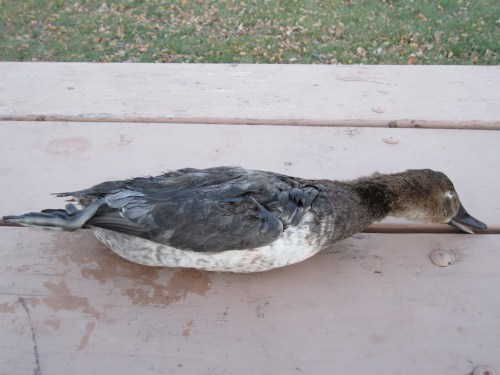
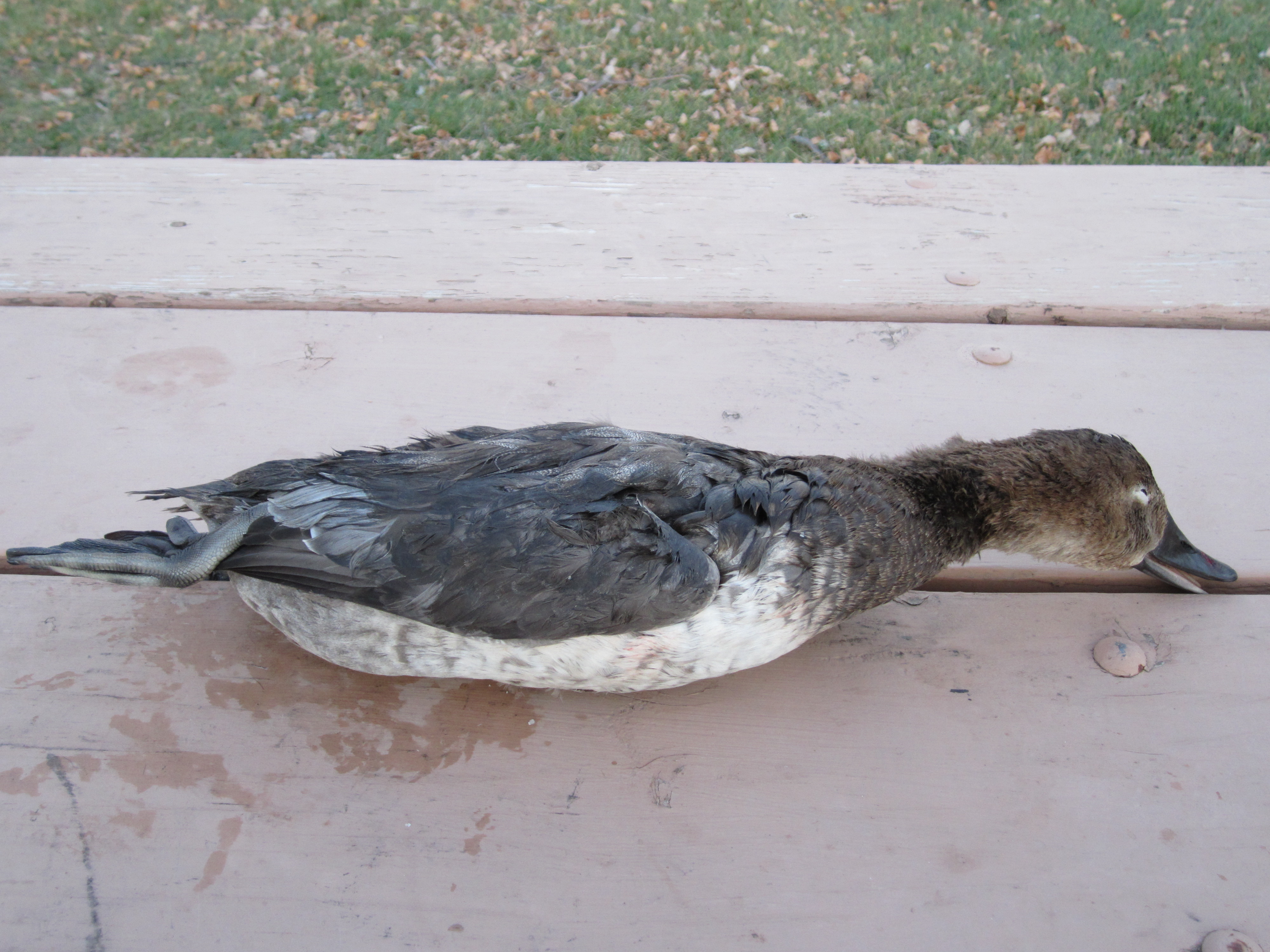
Closeup of the female canvasback duck

Tuesday, October 18th

Tuesday morning we skipped the roost jump, opting for sleeping in.  I then made the mistake of taking a prescription strength, horsepill sized ibuprofen with my coffee in hopes of relieving the stiffness in my neck, shoulders and back.  Charles had picked a little pond in the middle of a harvested cornfield, thinking that it held loafing promise.  We had driven in on a minimum maintenance road a quarter of a mile from the main road, took about 10 steps out of the truck, when Sam and BB locked up on a small clump of swamp grass on the border between the cut corn and the pond.  Charles walked in on it, flushed a rooster and took it down within 2 minutes of leaving the vehicle.  For some reason the shock of the discharge of his firearm sent me into a spell, which I knew right away was an overdose of ibuprofen.  My heart and head pounded, I was almost too dizzy to walk and my stomach was a knot.  I tried hard to stick with it, seeing that BB and Sam again were locked up on the cattails next to the pond.  Two flushes, two shots, splash, splash.  I was so out of it, I thought that he had shot a duck and a rooster, but it was a double on roosters.  I wished that I had my camcorder in my hands instead of my gun.  Sam rounded up the water retrieves, he did pretty fast work on these, as he’s finally realizing that it is easier to slow down and use his nose in the water, instead of quickly swimming and running the banks.  “Time for lunch,” I said, not wanting to clue Charles into the fact that I was hating life at the moment.

“No, there are more birds here,” he pushes on.  So, I stumble 20 yards down the pond into some swamp grass.  I see the birds running, I see the dogs pointing, a rooster flushes right in my face and there was just no way I could focus.  Finally, I tell Charles what is going on, so he takes my gun and we walk (I stumble) the 50 yards back to the truck.  I got enough food and fluids in me to counteract the effects, then just curled up in the truck the rest of the day while Charles jumped ducks with no luck.

Charles's personal record limit in 10 minutes on Tuesday

Wednesday, October 19th

I was back in business Wednesday morning and we were sure to be at it up and early for a roost jump.  It was a large brome field with low, rolling terrain, surrounded by standing corn and cut wheat.  Charles took his first bird within 15 minutes of getting out, which was a good sign for what the field held.  A lone sharptail jumped in front of me within range, but I hesitated in identifying it in time to get a good shot off.  The dogs locked up on point that Charles and I squeezed in on.  The rooster flushed about 10 yards away, where it could have been either person’s shot.  The rooster charged me, flew right at my face and I missed.  He flew between us and I swung at him on the other side of us and I missed again.  As the rooster was making his exit from range, Charles pulled up on him and got it (Damn!).  We continued toward the corn and saw a flock of sharptails fly into the other end of the field, probably 200 yards away.  It was nice to see, but not what we were after, since we chase those frequently in Nebraska.

We turned back towards the truck and walked until we were almost there when all three dogs lock up on point.  Charles wrapped up his limit that day in about 45 minutes.
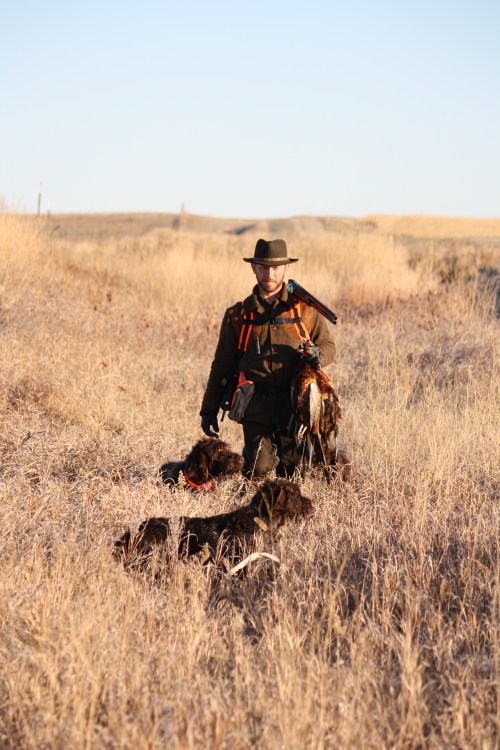
Sam, Sue and BB with Charles and his Wednesday limit

As planned, we headed to town for lunch to meet fellow griffoniers (that’s what Wirehaired Pointing Griffon people are called) Tom and Susan.  They opted to leave their griffs, Mr. Favor and Zephyr, at home to let our three dogs work.  We returned to the hills where I took my first rooster of the trip, and walked to where we spooked birds the first time.  All three dogs were closing in on a tall grass and weed patch in the dip of the hills.  I walked into the middle of three solid points, kicking the ground as I went.  I saw what I thought was a scrubby bunch of short grass that they were all locking down on and I nearly kicked it.  “Porcupine!!  No, Sam, no BB, no Sue, get off of it!!”  The big dogs have played porky’s game before, so they didn’t bother with it much more.  Six-month old BB lingered over it momentarily, looking inquisitive, but seemed to know not to dive in (especially since mom was having a cow).

Just over the hill was the magic bush, where Charles peppered the rooster in the butt on day 1.  I made the mistake of wading in, when I should have scooted around the brush.  The rooster flushed, but I was too mired down in twigs to get a good shot off.  So we marched toward where we saw him land, on the last high hill before the truck.  I was walking about 10 yards down the slope from the crest, when I saw Sam lock on a perfect point.  I knew it was that rooster again.  He alighted towards the standing corn across the road below and seemed to just float away.  I’m shooting too low, not leading them with the gun, birdwatching instead of putting my head on the gun and shooting.  Another disappointment for the dogs, they seemed to look at me like, how could you miss that?

We had given that area a pretty good shakedown and it was time to put Susan and Tom on to some birds, so we went to a creek bottom down a steep minimum maintenance road.  Tom had two birds and Susan had one within a matter of 20 minutes.  The most exciting part was that BB found and started to retrieve Tom’s second rooster, but Sue thought she’d be a bully and finish bringing it in.
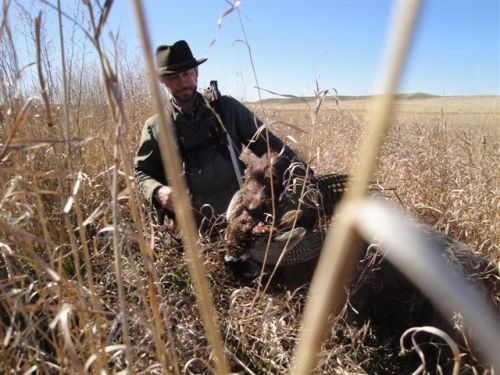
Sue brings in the rooster. Photo by Susan Davy
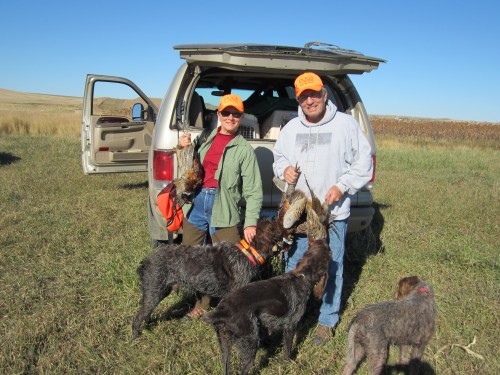
Susan and Tom with Sam, Sue and BB

Charity, Charles and the dogs. Photo by Susan Davy

Charles had reached his pheasant possession limit that day, so in order to have one last hunt in the morning and be in good standing, we had to cook some pheasant that night.

Possession Limit Pheasant Camp Chili

3 pheasants, deskinned, deboned and cut into 1 inch cubes

2 packets of white chili seasoning

1 bottle of water

1 can of northern white beans

3 tablespoons vegetable oil

Heat cast iron skillet over camping stove or fire.  Pour vegetable oil into skillet and add pheasant.  Cook the pheasant over low heat for 5 minutes, stirring frequently until browned.  Add seasoning and water.  Simmer over low heat for another 5 minutes, add beans.  Allow to simmer on low, stirring frequently until the beans are hot.  Serve with corn chips.

Wednesday evening bird total prior to plucking and packaging

Thursday, October 20th

For the last morning out before the road home, we opted to return to the field where we had hunted with Carl on Sunday morning.  As we pulled in to park the truck, we could see 15 roosters and hens scurry across the farmer access path into the freshly harvested sunflowers.  I opted to walk 10 yards into the harvested sunflowers while Charles walked the farmer access path, with a fence surrounded by thick grass between us.  Once we let the dogs out, young BB went berserk because of the number of birds.  While Sam and Sue held pretty close and pointed up a rooster for Charles in the grass, BB burst ahead and busted up 5-10 roosters and and twice as many hens way out of range.  On her way back to Charles, she popped one up my way, but I’d long since lost my pheasant mojo.  We cut up into the grassy flat and low hills where Charles had harvested birds on our first excursion into the field.  True to form, he took another one and I missed another gimme shot.  It was getting close to the time we wanted to pack up, so we headed back to the farmer path.  Over at the homeplace on the far side of the sunflower field, the hired men were firing up the tractors to finish up the harvest and we had high hopes that we’d at least see one more rooster for Charles.  “Where are the dogs?” he asked me.

“Right there,” I pointed into the grass along the fence, on the other side next to the harvested sunflowers, “and they’re all on point.”

Charles hopped the short fence, walked into their points and got his limit for the day, just in time to go home.  I didn’t even take a picture, I was ready to pack up and go home on several levels.

Adventure isn’t always fun or easy, frequently it challenges you to improve your skills.  I will be spending plenty of time at the gym and the skeet range between now and next season.  I will not be defeated by the rooster.

“Yeah, they’ve come to snuff the rooster.  You know he ain’t gonna die.” -Alice in Chains
North Dakota Pheasants 101

Leave a comment

Legendary.  North Dakota’s state slogan holds true in so many different histories, pheasant hunting being one of them.  A seasoned sharptail grouse and duck hunter from the Nebraska Sandhills, I bagged my first pheasant in North Dakota on Saturday the 15th.

My husband Charles is an experienced pheasant hunter, starting in the mid-1990’s heyday of Southeastern Nebraska.  Unfortunately, those days of easy limits are just a memory for us due to years of habitat loss and poor weather.  He took his first pheasant hunting trip to North Dakota six years ago and has been back for one week a year every year since.

Hunting pheasants unguided in North Dakota takes a few key skills:

1) Dogs.  More than once I walked over the top of a pheasant last week and a person alone will typically make them run away.  If you want guaranteed flushes, several good hunting dogs will give you the sign of the birds’ presence and help to put the pressure on them to fly.

Charles, a pheasant limit and our Wirehaired Pointing Griffons
2) Knowledge of behavior and habitat.  Take to brome fields between cropland at first light to “jump the roost” and act as their alarm clock if you are fast enough.  Take a one or two hour break after your roost jump to allow the birds to feed in the cropland.  Locate “loafing grounds”, small areas of dense cover completely surrounded by cropland, such as cattail marshes, creeks or treelines.  Stick to loafing grounds until late afternoon, then switch to duck hunting if you can to allow the pheasants to repopulate their roost fields before dark.
3) Scouting.  You can’t hunt the same fields day after day in good conscience.  North Dakota supplies plenty of hunting opportunities between Waterfowl Production Areas, PLOTS ground (Private Lands Open to Sportsmen), Wildlife Management Areas and unposted ground.  In North Dakota, hunters can legally access private land as long as it is not posted “no hunting/trespassing”.  Accessing private land is a privilege and  hunters need to use their best manners to keep these opportunities available to all of us. (Please read the specific regulations for each of these areas prior to hunting them, written information available at most gas stations.)

This is not the “redcoat march” as a friend of mine calls the South Dakota style of pheasant hunting.  North Dakota is a game of skill best taken on by those wanting a good challenge, yet desire the high chance of finding enough birds for everyone to get their limit.

Good shooting is up to you!

Trip total, mostly courtesy of Charles.

Nebraska Duck Opener: A Versatile Hunting Weekend

1 Comment

You know that it’s that special time of year when you’re driving through the dark at 8:30 PM and the farmers are still in the field harvesting grain.  Another late night run from the Eastern Nebraska metro to the Sandhills for three die-hard duck jumpers.  Charles and I were joined by one of our usual hunting buddies, SSGT Ryan Tompkins, who returned from Army deployment in Afghanistan earlier this year and is also an Iraqi Freedom veteran.  Since duck didn’t open until Saturday, we enjoyed sleeping in on Friday and getting out into the dunes close to midday.  The grouse don’t care what time we show up.

Almost as soon as we started hiking, we bumped a pair of sharpies at about 200 yards.  We figured that if we chased them long enough, we would wear them down and get close, but this pair really led us on.  One and half hours and three flushes later, they totally gave us the slip.  “I am not spending my whole day chasing two grouse,” I told the guys.

They agreed.  What we originally set out in front of us as a nice, easy day took a tone of seriousness as we marched deep.  The wind out of the south was fierce, so we set our faces towards it and placed our bets on them sitting either on the north side of the dunes or down in little bowls.  As we climbed higher, a pair jumped up in front of Ryan and he brought one down.  Typical to the long process of grouse hunting, our first bird of the day was two hours into the trip.  We continued southeast into some high chop, expecting to see something but didn’t.  As we came to the eastern end of the dunefield, Charles suggested that we come down from the heights and swing back west low on the flat to the north of the dunes, as this was prairie chicken country too.

As we strolled back westward on the flat my mind was not on birds.  It was hot, windy and at this point we’d been on the march for three hours.  Two chickens jumped in front of me and I was admiring them drift over the little hill, as the guys are yelling, “Shoot!!!  Shoot!!!”  I took Hail Mary shot just as the bird was cresting the hill and it went down hard in a poof of feathers.  I called my six-month old griffon puppy over to me for a retrieve attempt and she gave the downed bird a solid point.  I gave her the fetch command and she started to scoop the bird into her mouth, but in her hestitation, three year old Sam came in and snagged the retrieve.

I was very satisfied with my big male prairie chicken and knew that if I decided to stay with the guys that it would be anything but an easy day, as Ryan and I each had a bird in the bag and Charles had nothing.  My slow walk back to the truck was marked by the sound of the guys’ gunfire.  The easy route was through a valley filled with ponds, so as I was dodging some wet spots on the side of a dune, I pushed up a group of about 20 sharpies.  I cracked off a couple lackadasical shots, but didn’t connect and didn’t care that I hadn’t.  Wanting to be sure that the guys had more birds, I went back in their direction to give a report of this new flock.

When I met up with them, probably an hour after I broke away and headed towards the truck, Charles had his limit of three and Ryan had gotten one more.  Charles got to see one of his favorite sights, which is when both of our two adult dogs have birds in their mouths.  They were all satisfied and ready to call it a day.  We figured that between all of our flushes, we had seen 40-50 birds that day, which is more than we had seen any day all grouse season.

Charity with her prairie chicken, Charles with a limit of three sharptails and Ryan with two

The opening day of duck season came early, as it should.  We chowed on a large McDonald’s breakfast and hit the road.  Our first jump came on a set of potholes, chock full of snipe.  Charles called us off of the snipe, for fear of scaring any ducks that may be resting in the puddles.  Only fifteen minutes out of the truck, we spotted a duck-like flutter in the water.  In a flush of little ducks, all three of us each got a blue-winged teal.  Such pretty little ducks, teal are definitely one of my most targeted.  Unfortunately, the snipe had scattered as we made our way back to the truck, but a random dove found its way into my sights and I decided to take it.

The second pond we jumped has been a “problem pond” for several years.  Either we jump it with nothing sitting in it, or we roll up on it in the truck only to have ducks everywhere.  As it is a pond that we know well, we went tactical on it, with BB and I sneaking up on the west side and the guys with Sam on the east.  Crouched on the banks in the grass, we signaled to one another that we were ready to jump.  So in we went.  The first flush was a big group of teal.  Ryan and Charles each took one of those.  As they searched for their downed ducks I made my way down the bank, missing an easy shot at a beautiful drake woodduck, which made me mad for the rest of the day.  Took down two coot, then headed back to the other end of the pond to see how the retrieves were going.  They were still short a duck, so they asked that I head back to the truck for the more methodical dog, Sue.  Slow working Sue took no time at all to find the missing duck while Sam tracked down my two coot in the water.

On we went to the creek that we were going to walk.  The entry point is a large pond, so we snuck into that.  Ducks everywhere!  I took two, Charles took two and Ryan took one.  We had to stop, collect Sam and Sue’s hard fought retrieves and identify what we had in order to be sure that we weren’t violating any waterfowl regulations.  All five were ringnecked ducks, the first that we had ever taken.

We worked our way down the creek and I busted another flock of teal.  I was sure that I had wounded one, but it wasn’t retrieved until a couple of more flushes of it, an hour or so later on our way back down the creek.  It’s amazing to watch a dog aggressively seek out a bird that was downed so long ago, without dogs we never would find a bird like that.

Ryan took a couple of more cracks at coot, but a herd of cattle had worked their way down the creek in advance of us, so where we thought there would be dozens of ducks there was nothing.  We worked the area for another hour or two with no results.  It was our usual Saturday steakhouse night, so we were ready to head back to town, clean up and go out for some beef.

Ryan's 2 blue-winged teal, 1 ringnecked duck and a coot, Charles took 2 blue-winged teal, 2 ringnecked ducks and a coot, Charity's 2 blue-winged teal, 2 ringnecked ducks, 2 coot and a dove

We headed out early again Sunday morning for some new territory.  The ducks had obviously been shot at previously, because in addition to terrain challenges (lack of cover) we had no chance at ducks for four or five ponds.  There were five coot taken that day, which Sam worked very hard to retrieve.  We even went so far as to try to belly crawl for 30 yards through cow pies and cacti, but still busted a flock of mallards way out of range.  It was a full day and a full weekend, so we were ready to head back to camp for some grouse fajitas.

Although our last day felt like a bust, looking at the weekend as a whole there was no reason to complain, as a successful versatile hunting trip had been achieved.

On our last day, each of the guys took 2 coot with 1 for the gal

Easy Grouse Fajitas:

6 grouse breasts, sliced thinly against the grain of the meat

4 packets of fajita spice mix

1 can of beer

A sliced red bell pepper and a sliced green bell pepper

Tortillas

In a bowl, mix sliced grouse breast strips, 1 can of beer and the 4 fajita spice packets.  Marinate for two hours.  Place a small amount of oil in the skillet, evenly spread a handful of the grouse breast strips and cook to medium rare.  Do not overload skillet, cook strips in 3-4 batches.  Set meat aside to cool while you sautee the peppers and warm tortillas.  Serves 6-8

Coot Vindaloo:

The cleaning of the meat is the most important part of this recipe.  The skinned and de-boned coot breasts should be free from visible fat and “silver skin” (transluscent whitish thin layer of fat that covers many game meats, such as venison) and should also be washed in cold water to get rid of excess blood.

Vindaloo is a very spicy Indian dish and should not be attempted by those with weak palettes.  Also keep in mind that it is a two day process, so start a day before you want to eat it.

Day One:

Breasts of 4-6 coot

1 pod of garlic

3 inch piece of ginger root

3 teaspoons prepared mustard

2 tablespoons cumin

2 teaspoons coriander

De-bone, de-fat and wash the breasts of 4-6 coot, cube into 1/4 inch pieces, set aside to bleed out a bit while you prepare the spices

Shred ginger root with a fine grater.  Crush and finely chop garlic pod.  Mix in a small bowl with the rest of the spices, adding vinegar to create a fine paste.  Drain the excess blood off of the coot cubes and rinse one final time.  Mix coot in the spice paste, then place in a glass jar and refrigerate for 24 hours.

Day Two:

10 dry red chilis

1 medium white or yellow onion

1 tablespoon of butter

1/2 teaspoon of tumeric

Jasmine or Basmati rice

Naan bread (optional)

Roast the chilis in a skillet.  Once roasted, place chilis in a mortar with a small amount of vinegar and grind to a fine paste with the pestle; set aside.  Start the jasmine or basmati rice per the directions on the bag.  Finely chop onion.  Place butter in a skillet over medium heat and brown the onion until transluscent.  Add tumeric to the onions and cook briefly.  Add your jarred coot meat and the chili paste.  Cook covered on very low heat until the meat is done, typically 5-10 minutes.  Once the rice is cooked, plate a serving of rice with a serving of the meat mixture on top.  Eat with a side of Indian Naan bread if you choose.  Serves 4

Older Entries Newer Entries